



Description
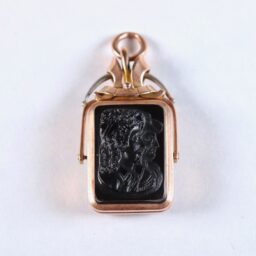
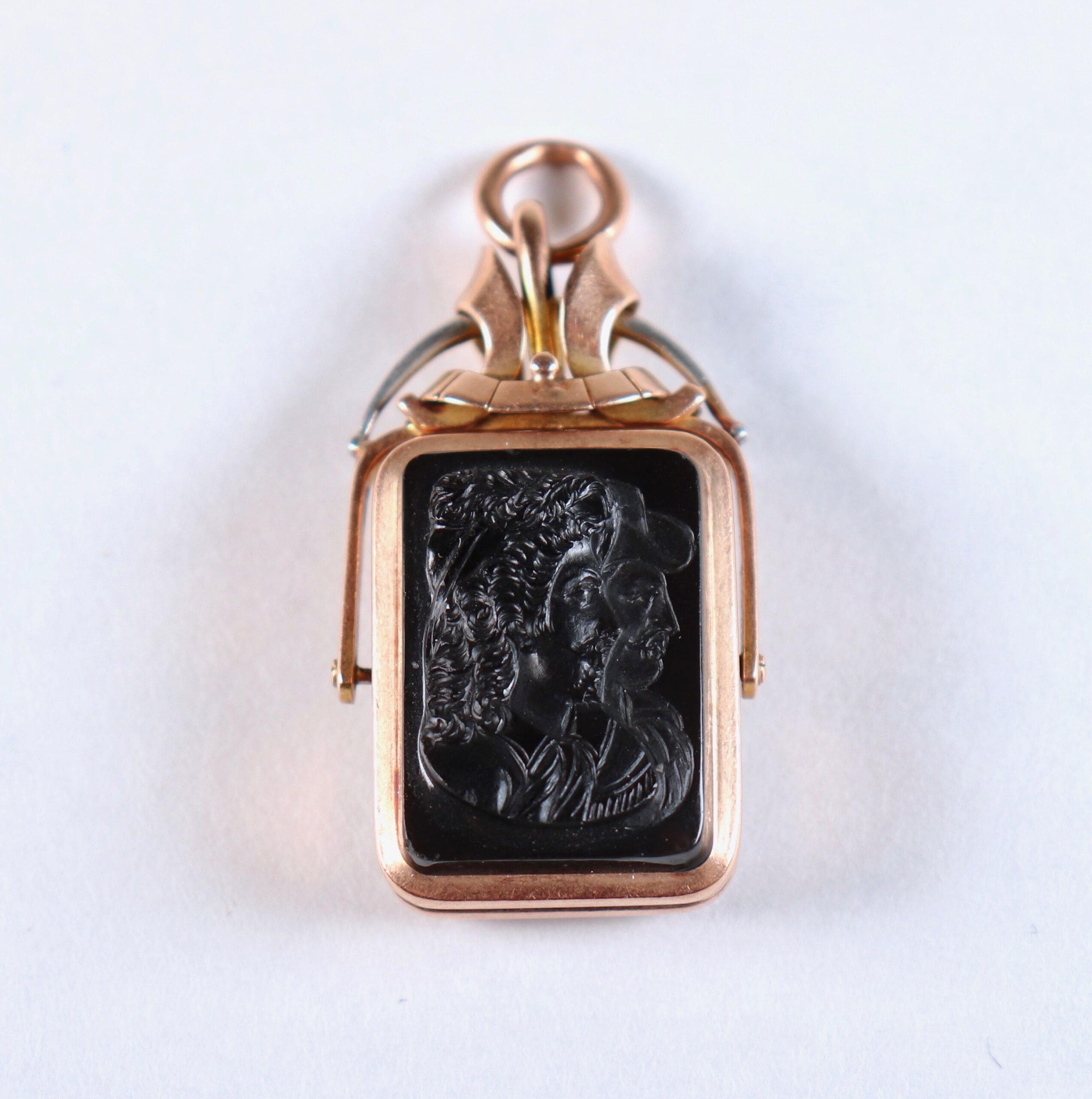
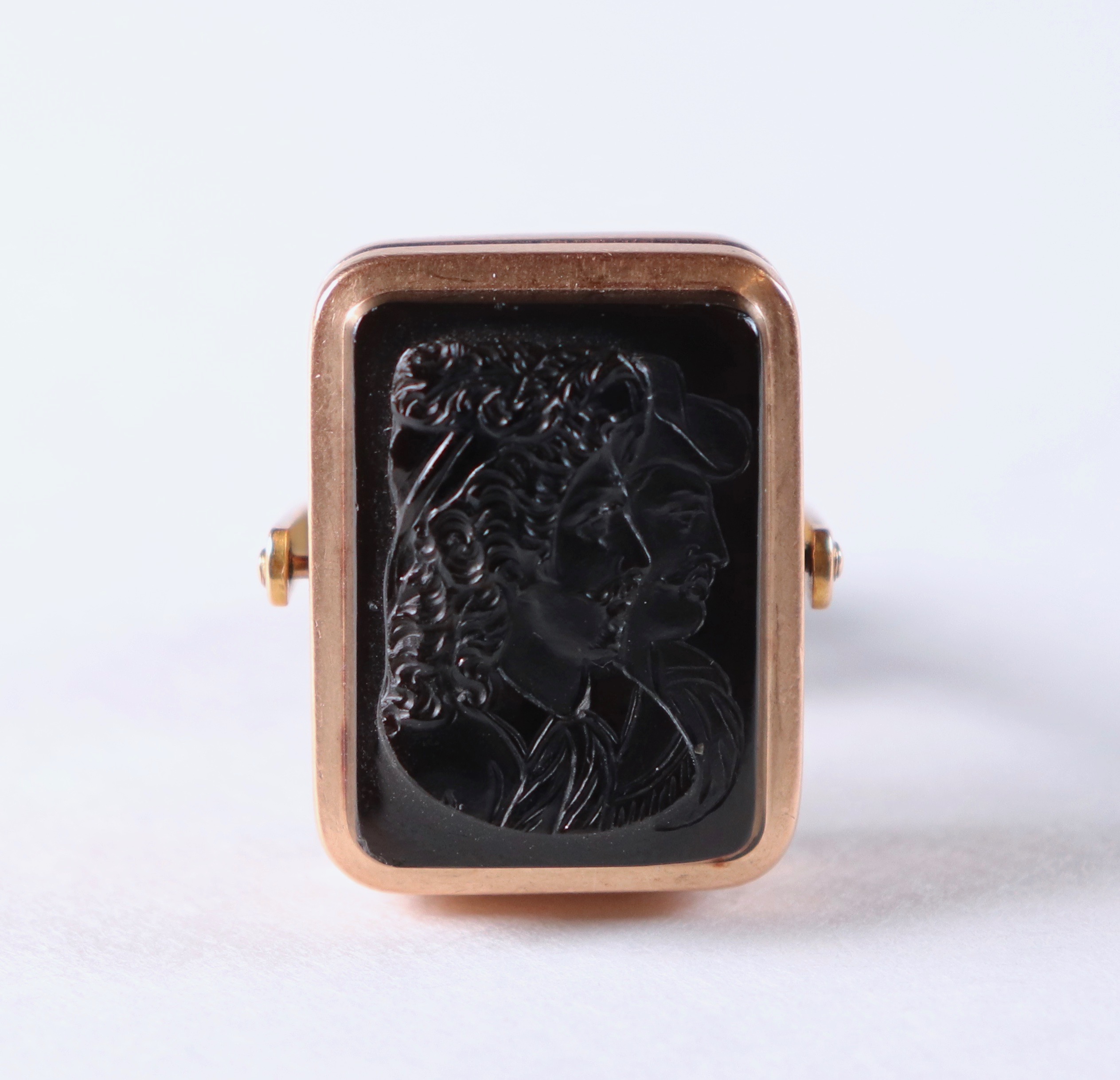
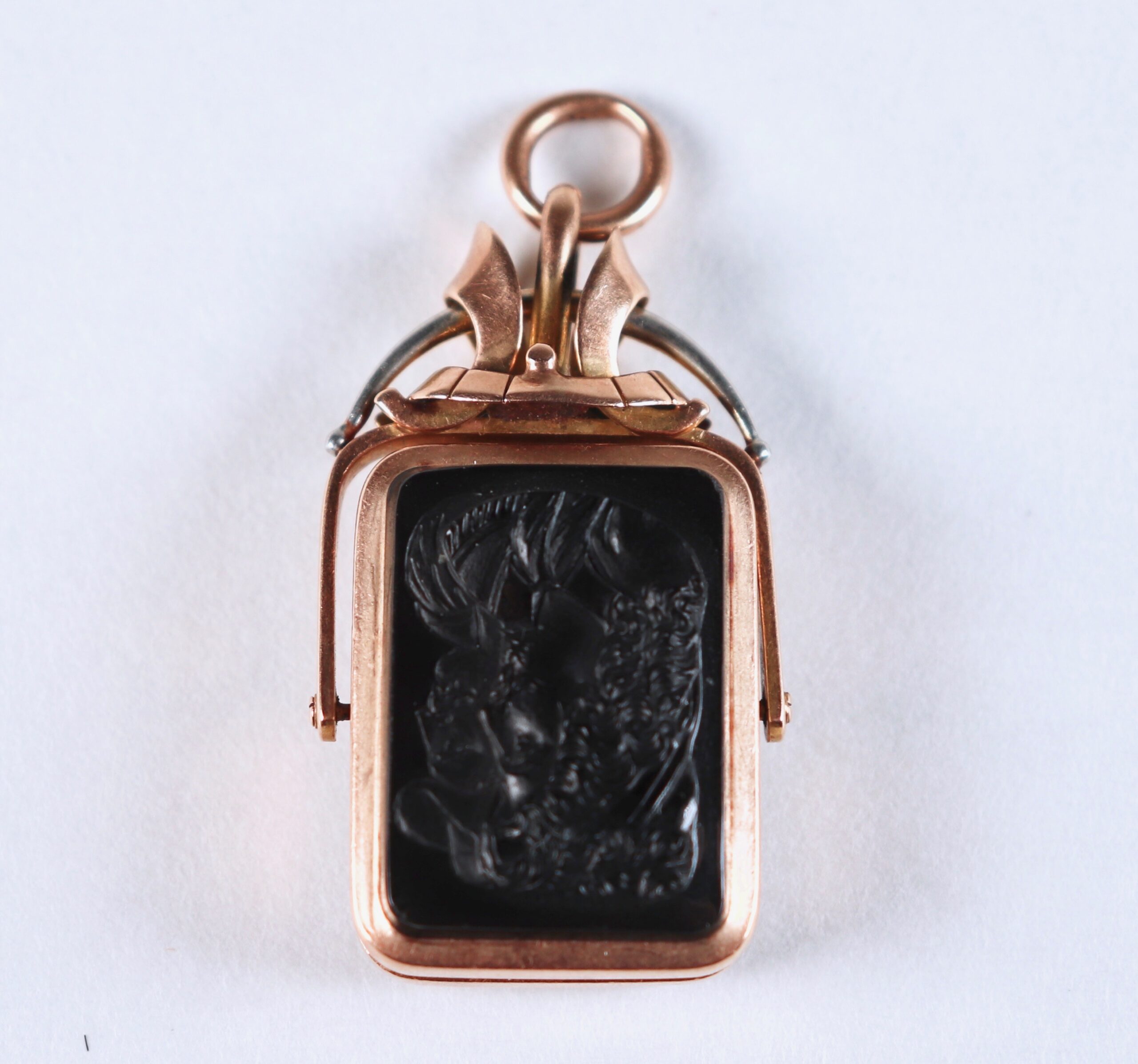
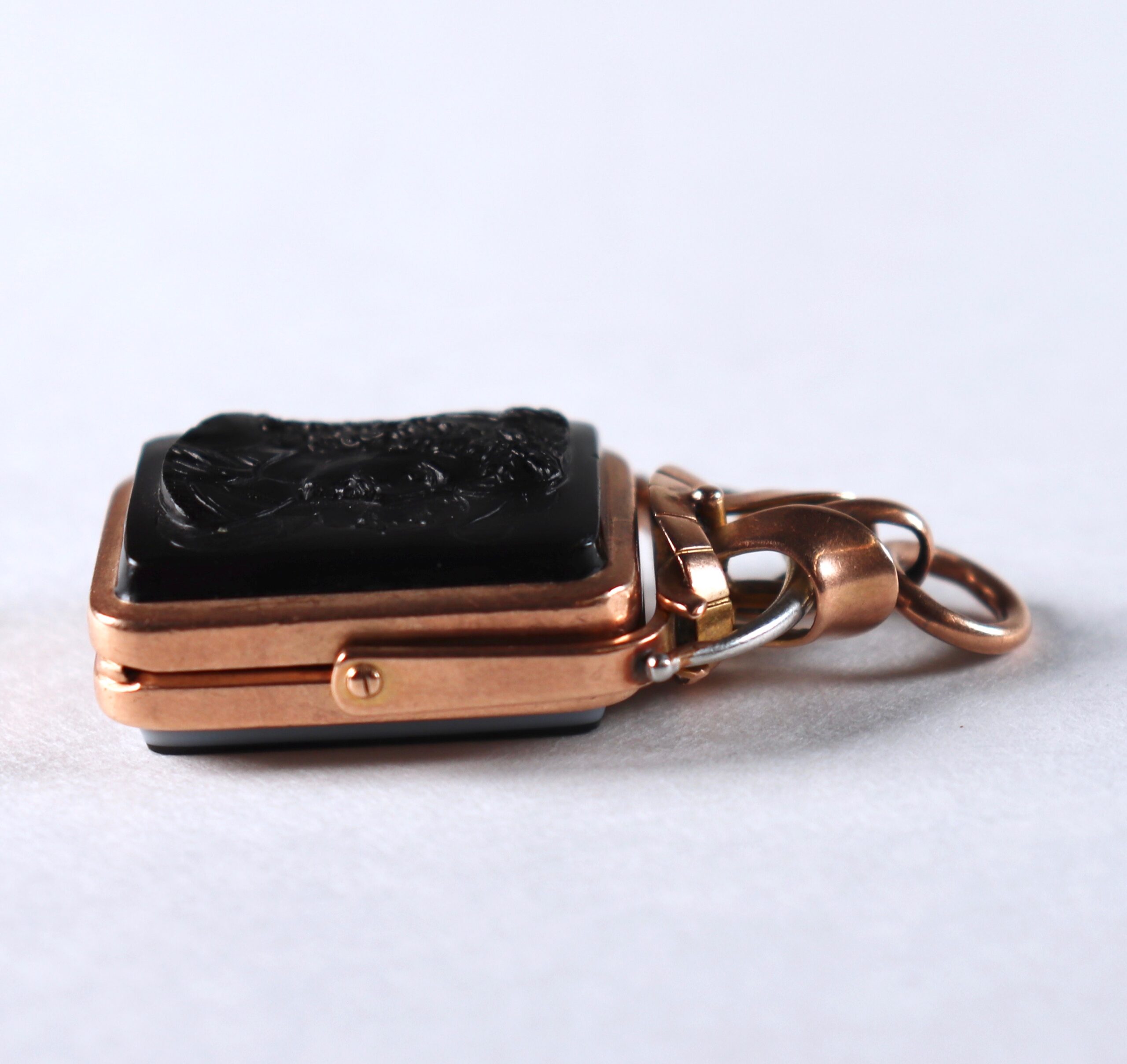
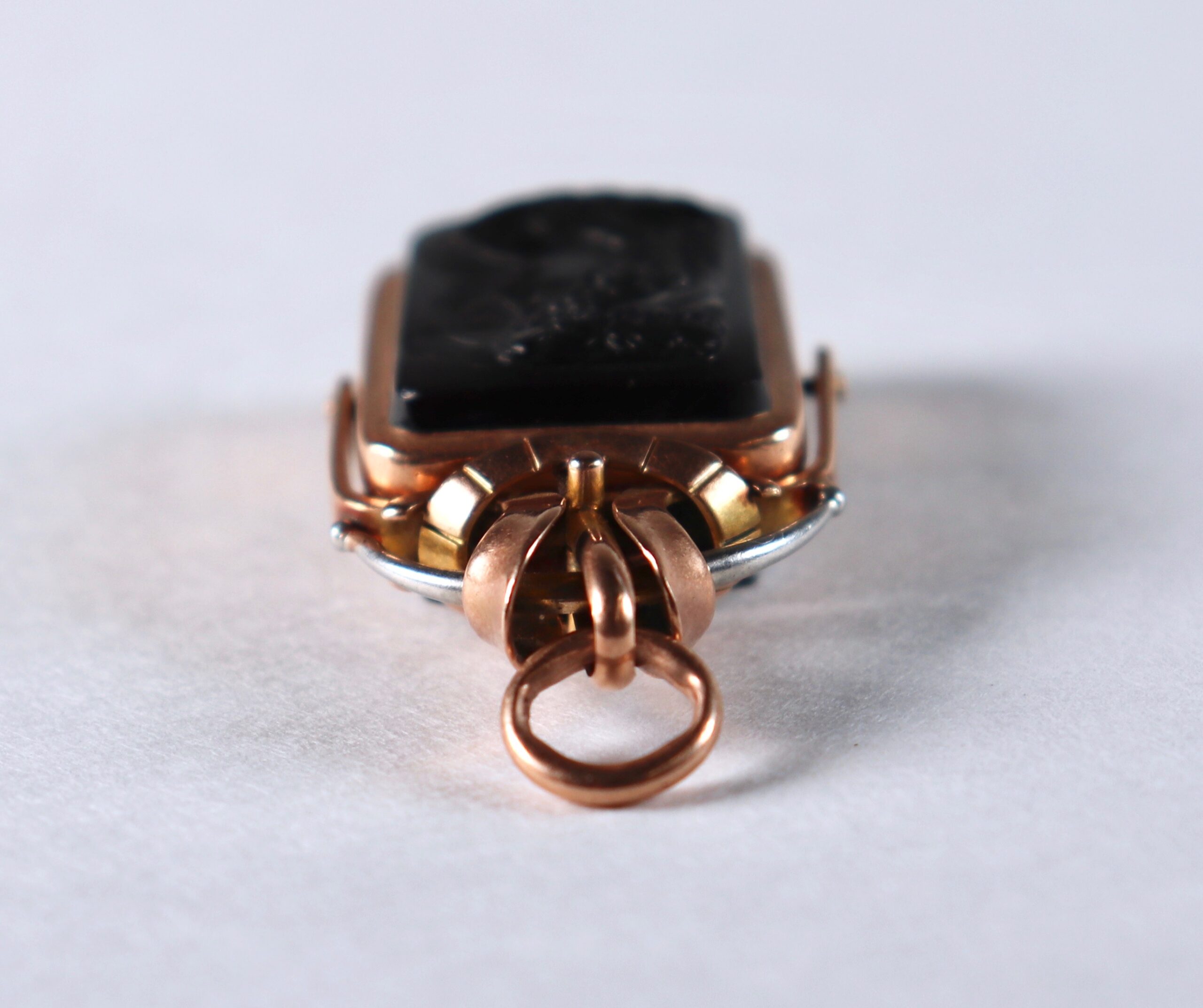
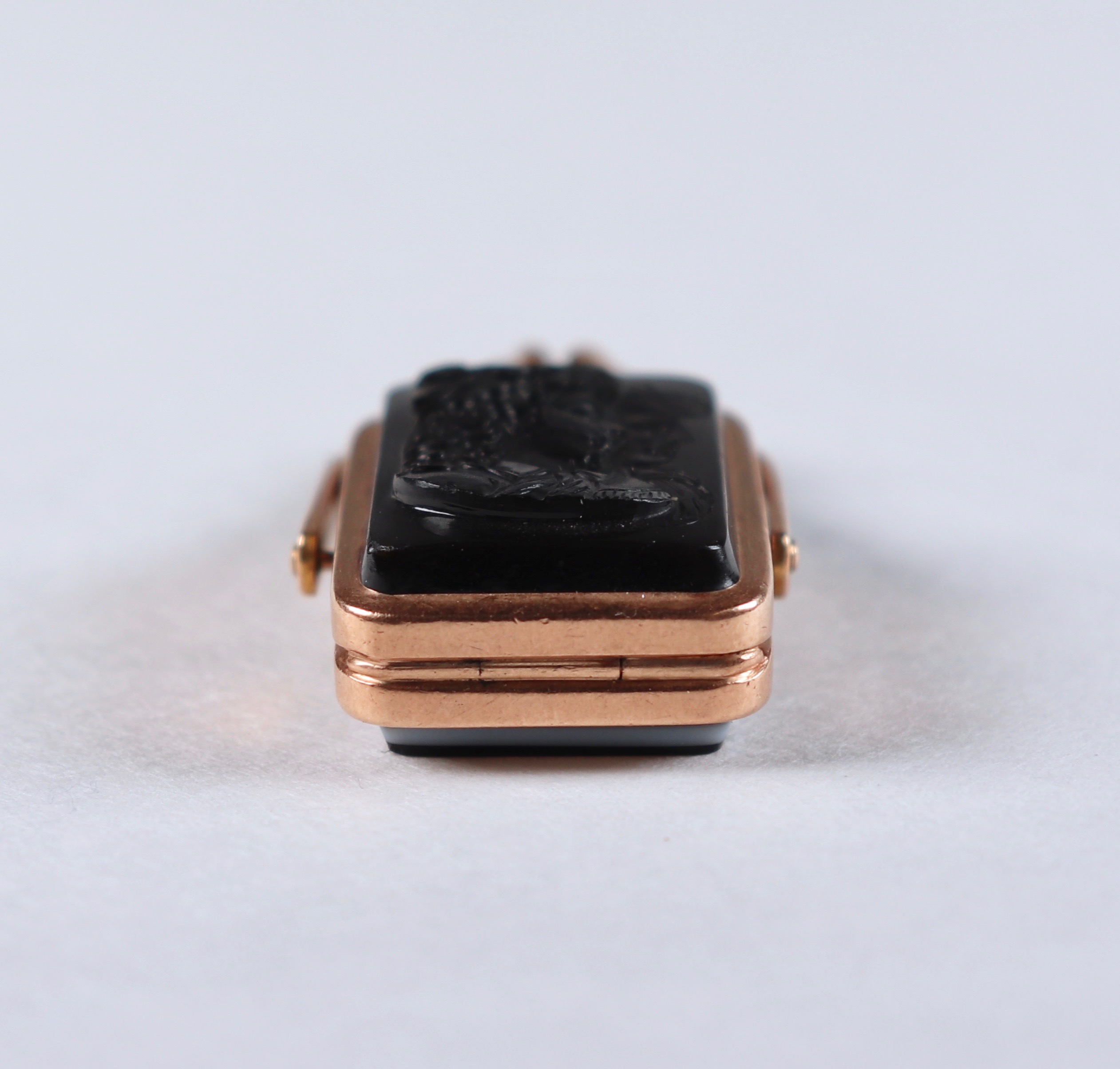
Wonderfully hand-carved onyx cameo featuring the profiles of two men—one with longer, wavy hair and a goatee, and the other wearing a hat—making this piece both rare and unique. Inside, the inscription reads “Tourville, Jean Bart, Pat’d May 14/78.” The “Pat’d” notation refers to a U.S. patent awarded on May 14, 1878 to Theodore Peiter, an American engraver and jewelry designer known for his innovative late‑Victorian portrait work. This firmly dates the piece to around 1878, placing it within the height of the Gilded Age fascination with historic and heroic imagery.
Peiter’s 1878 patent introduced a refined method for producing intaglio portrait carvings on hard stone—often onyx or agate—combining expert hand engraving with early mechanical reproduction. His process allowed realistic portrait likenesses of famous figures to be created with remarkable precision, blending traditional craftsmanship with the emerging technology of the era. Lockets and fobs inscribed “Pat’d May 14/78” are now recognized as scarce survivals of this brief but inventive moment in late‑nineteenth‑century jewelry artistry.
The profiles here are believed to represent Anne Hilarion de Cotentin, Comte de Tourville (born 1642 in Paris – died 1701) and Jean Bart (born 1650 in Dunkirk – died 1702), two of France’s most celebrated naval commanders under King Louis XIV. Despite his first name “Anne,” Comte de Tourville was a male French admiral renowned for his strategic brilliance, eventually becoming Marshal of France in 1693. Jean Bart, likewise, gained fame as a daring Dunkirk privateer and admiral, celebrated for his fearlessness at sea.
Though these men lived in the seventeenth century, their exploits continued to inspire later generations. This locket—crafted nearly two hundred years later—likely served as a Victorian‑era commemorative piece honoring their enduring legacy in French naval history.
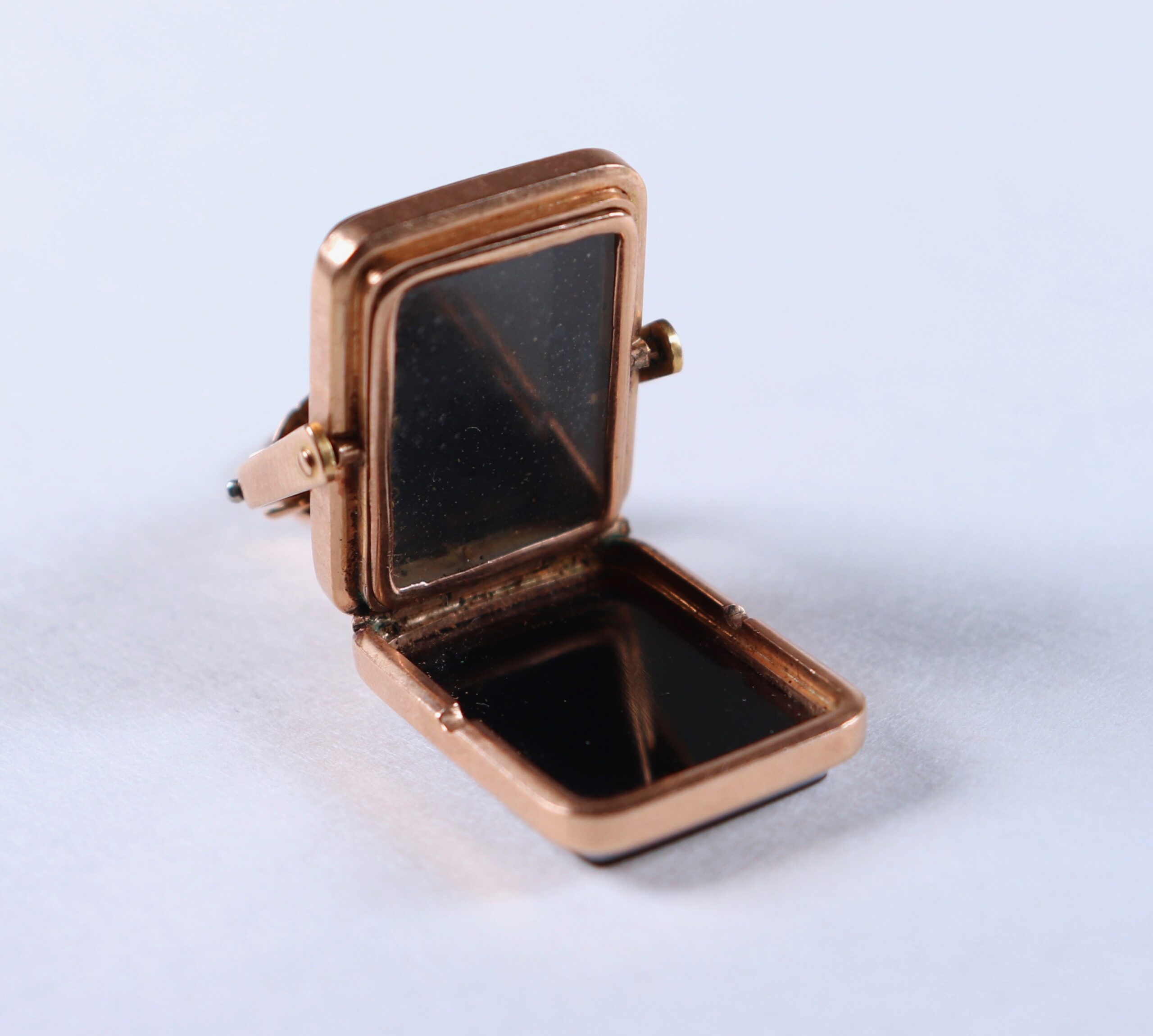
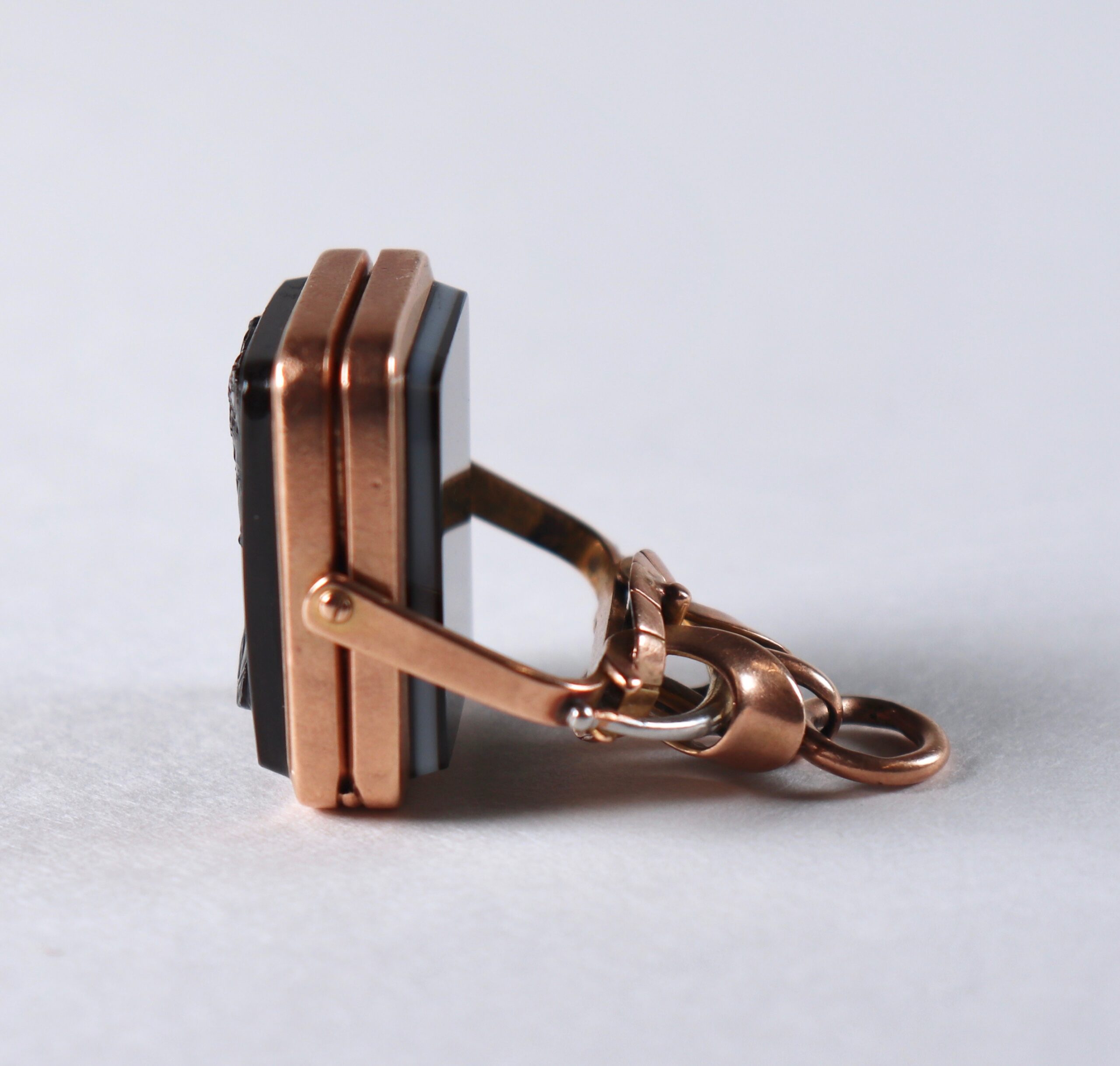
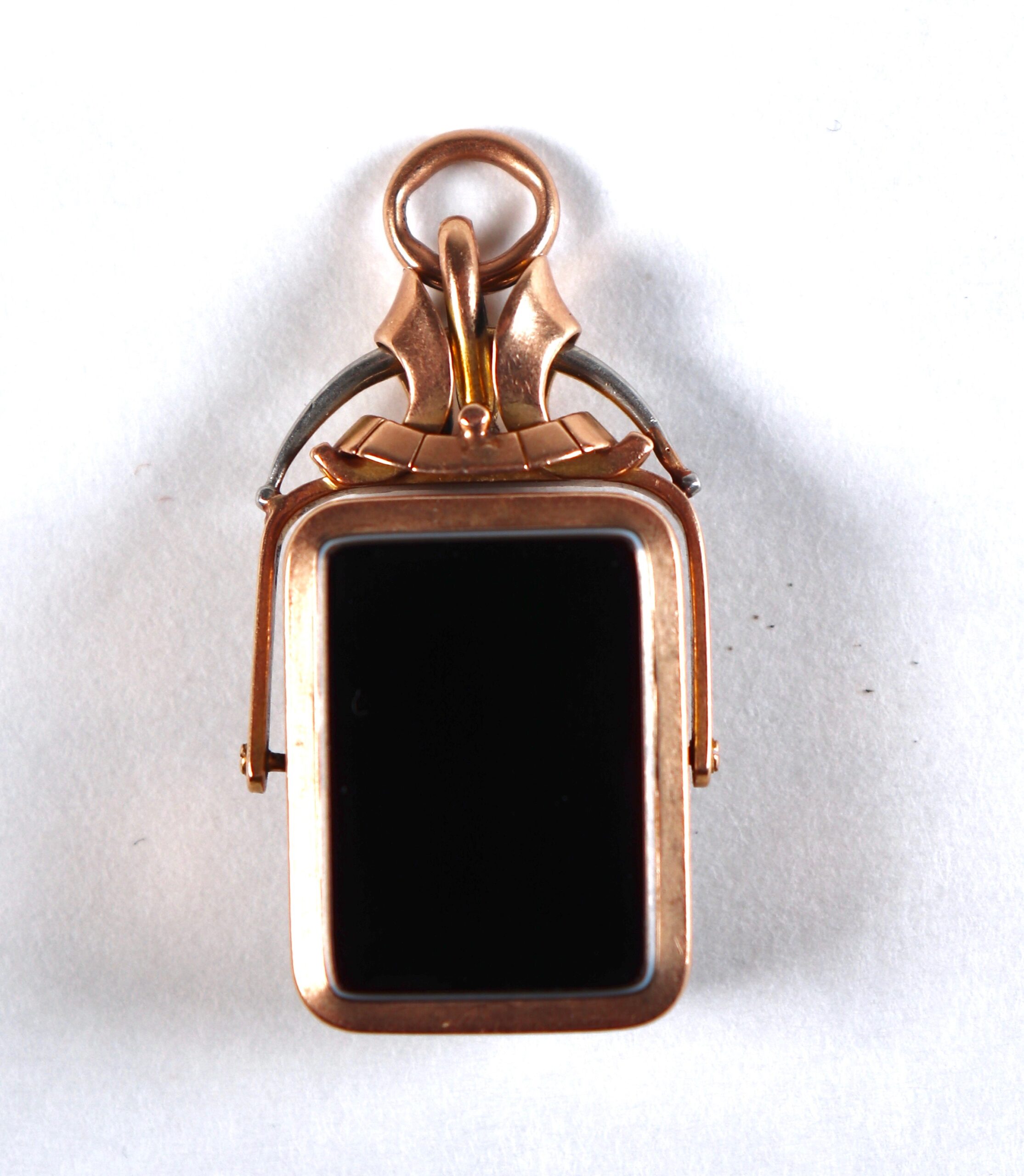
The back of the locket is smooth, polished black onyx, allowing the dramatic carving on the front to command attention. Inside, two compartments hold small photographs beneath their original glass inserts, both still intact. The combination of Peiter’s patented craftsmanship, historical subject matter, and superb preservation makes this cameo pendant a refined and meaningful piece for collectors of nineteenth‑century jewelry and maritime history alike.
Weighs 13.3 dwt, 19 grams
Depth: Open: 1.375 in., Closed: 0.375 in.
Historical Background: Theodore Peiter
Theodore Peiter (active 1870s–1880s) was an American jeweler and engraver who patented an innovative method of reproducing portrait intaglios for decorative jewelry. His 1878 design patent (U.S. No. 203,115) demonstrates how portraiture and advanced engraving met during the Gilded Age, allowing realistic likenesses of historical, mythological, or patriotic subjects to be replicated in fine materials like onyx. Items bearing his “Pat’d May 14/78” mark, such as this locket, are tangible records of that inventive period when artistry and technology elegantly intersected.