Description
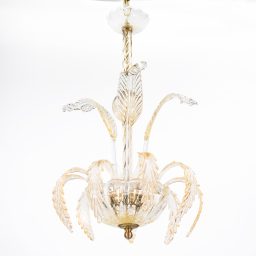
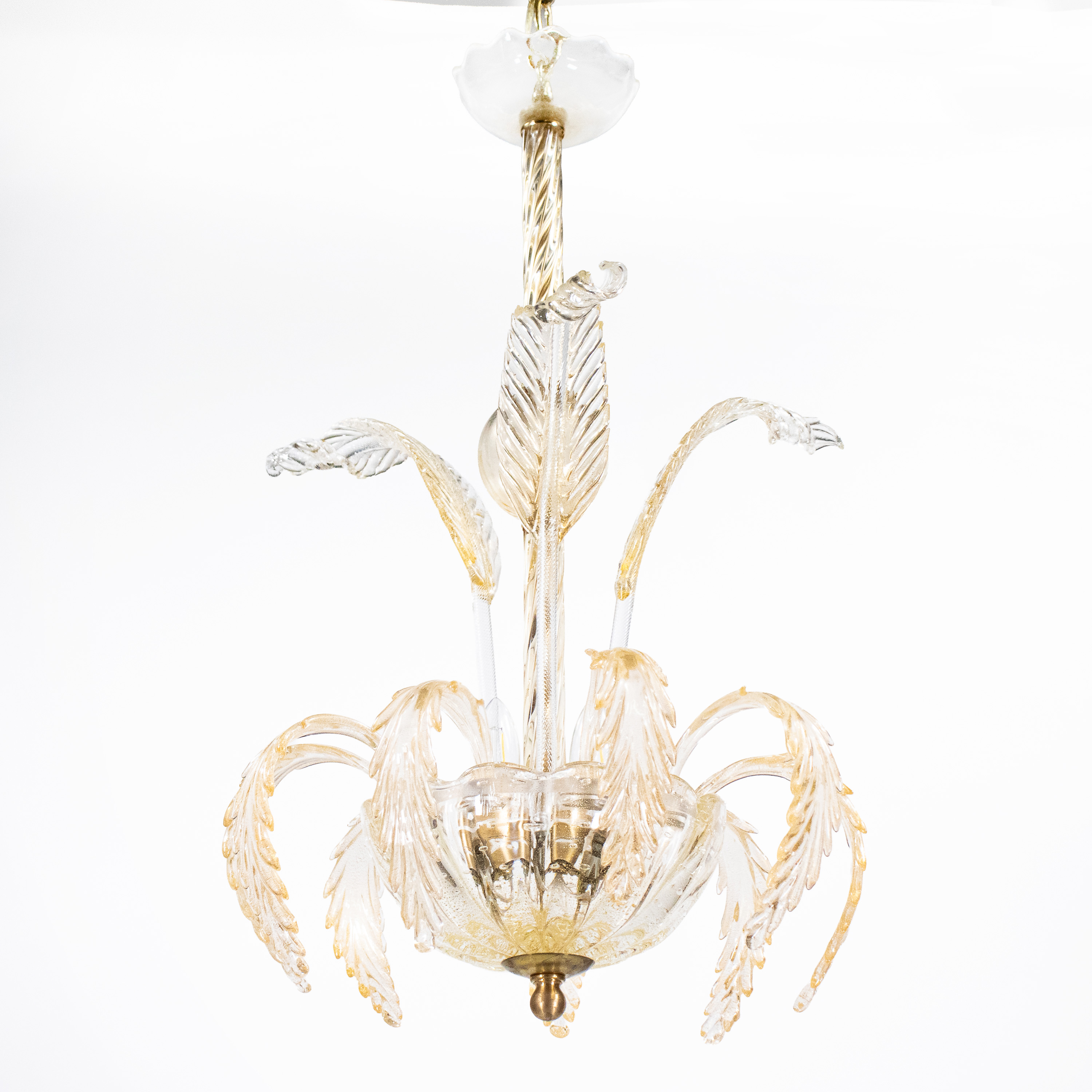
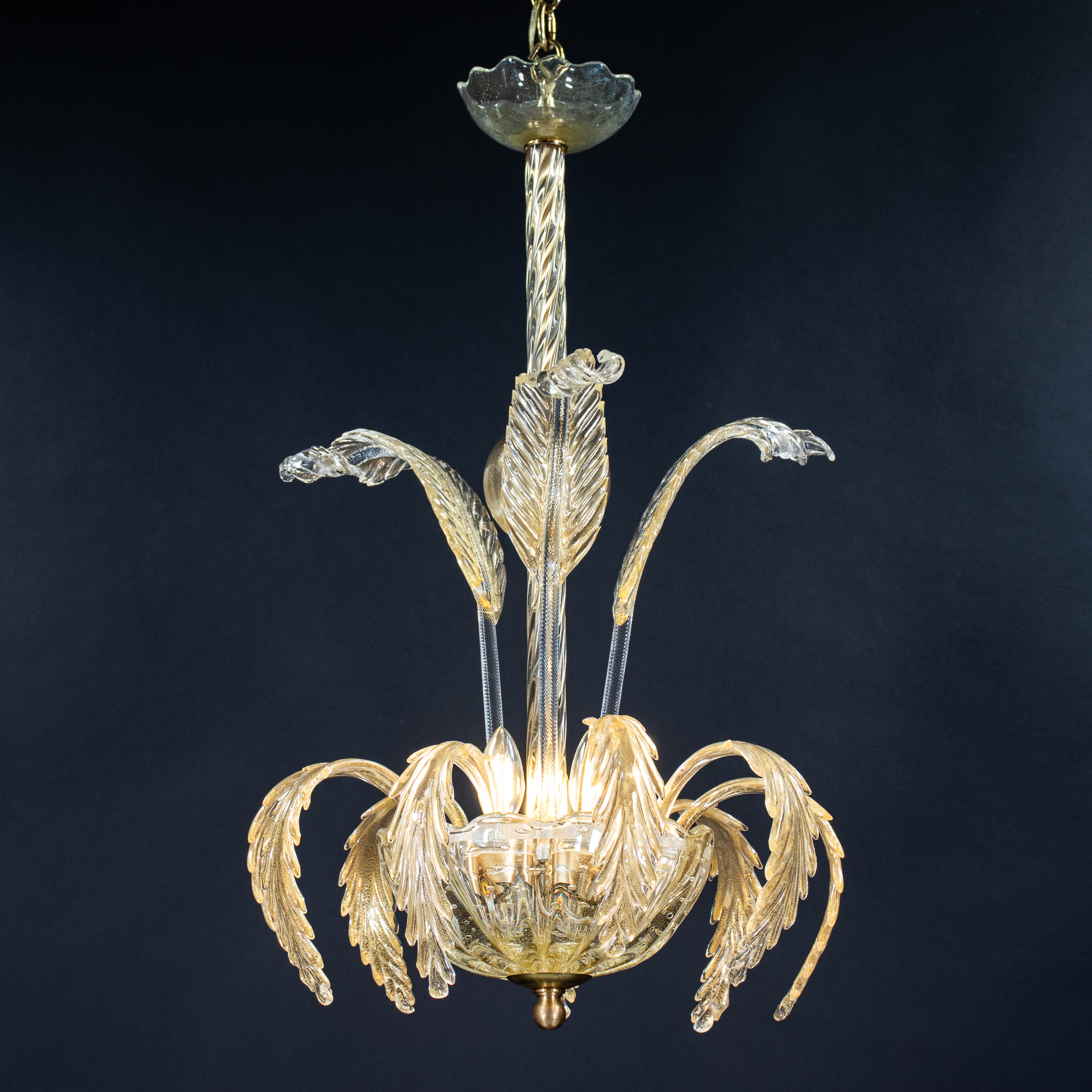
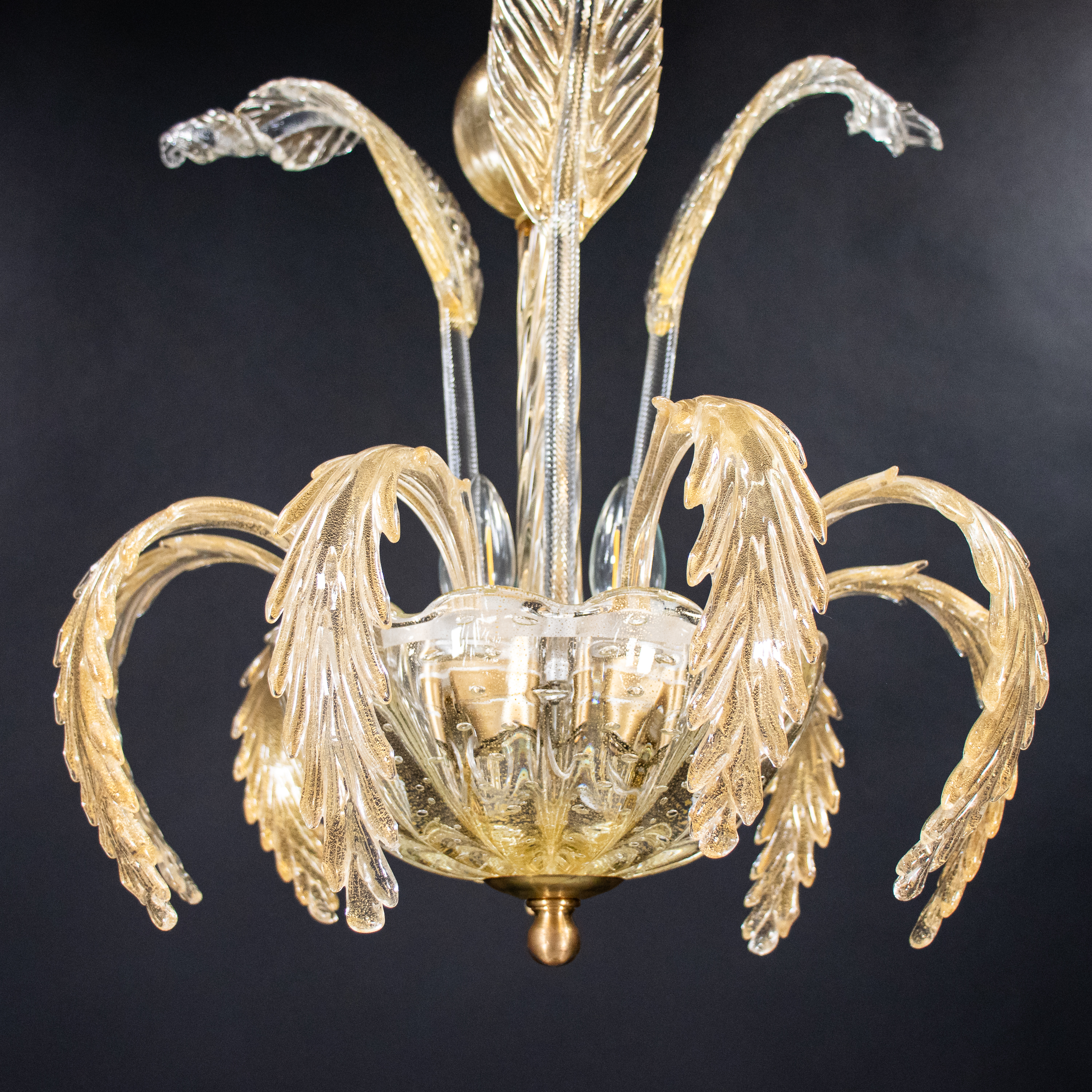
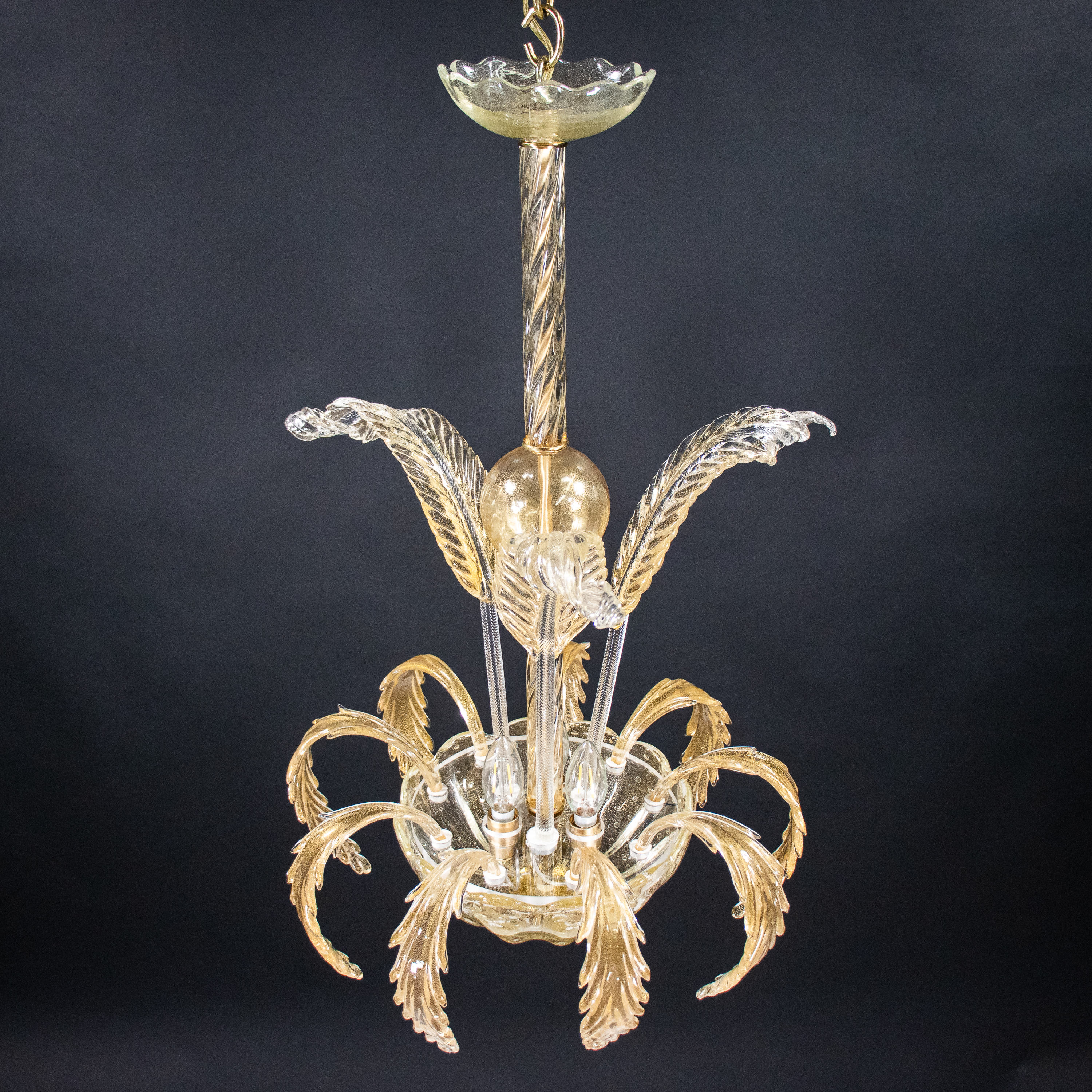
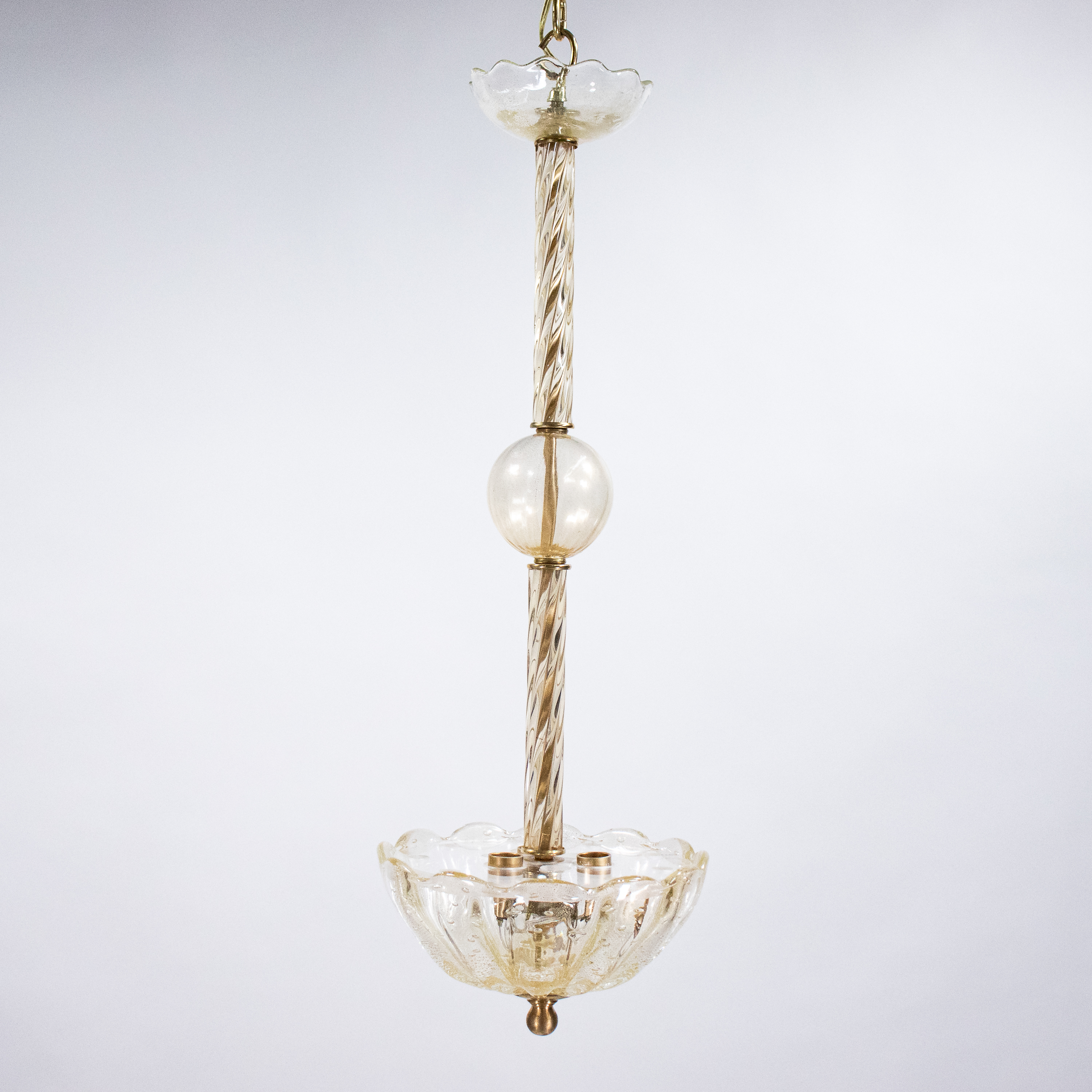
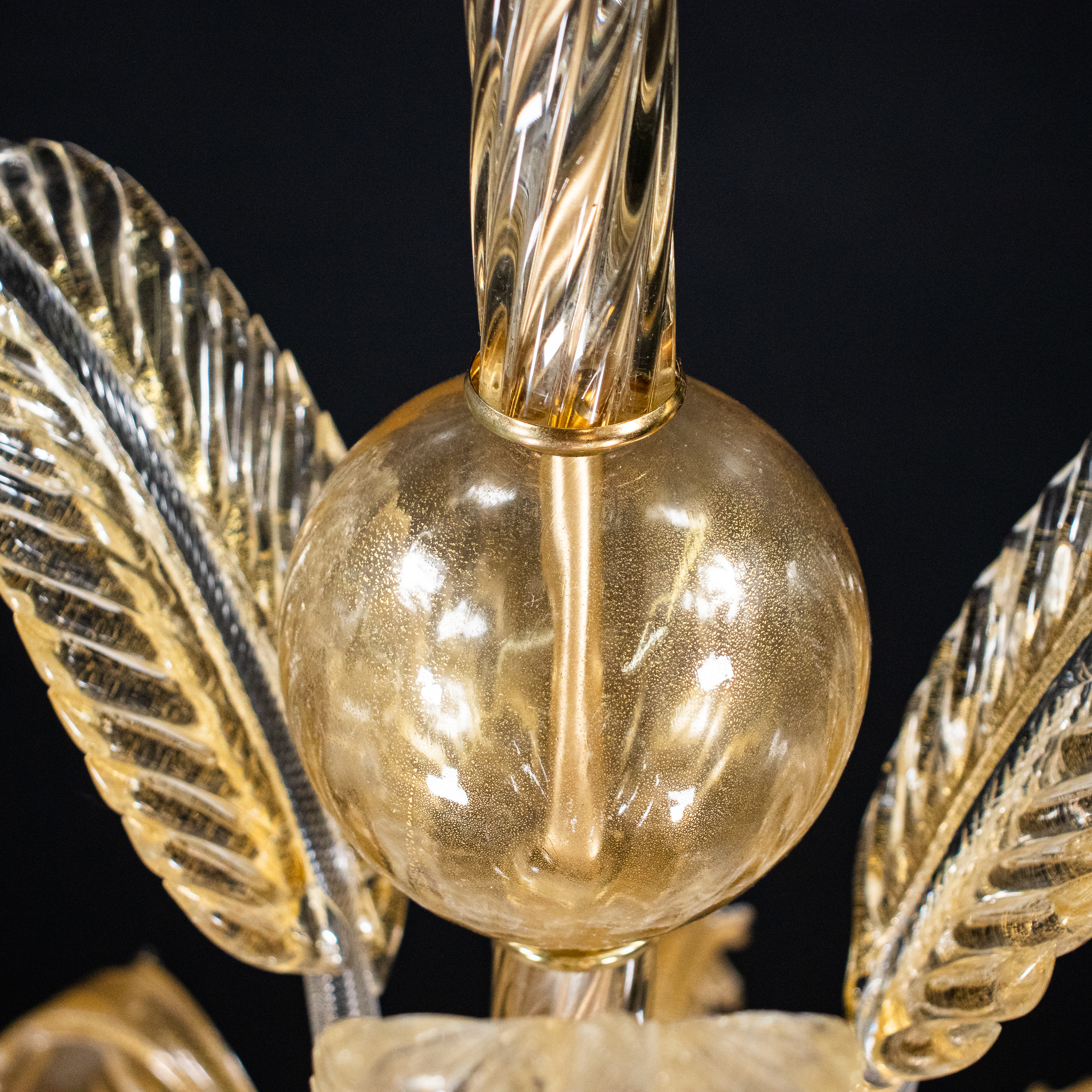
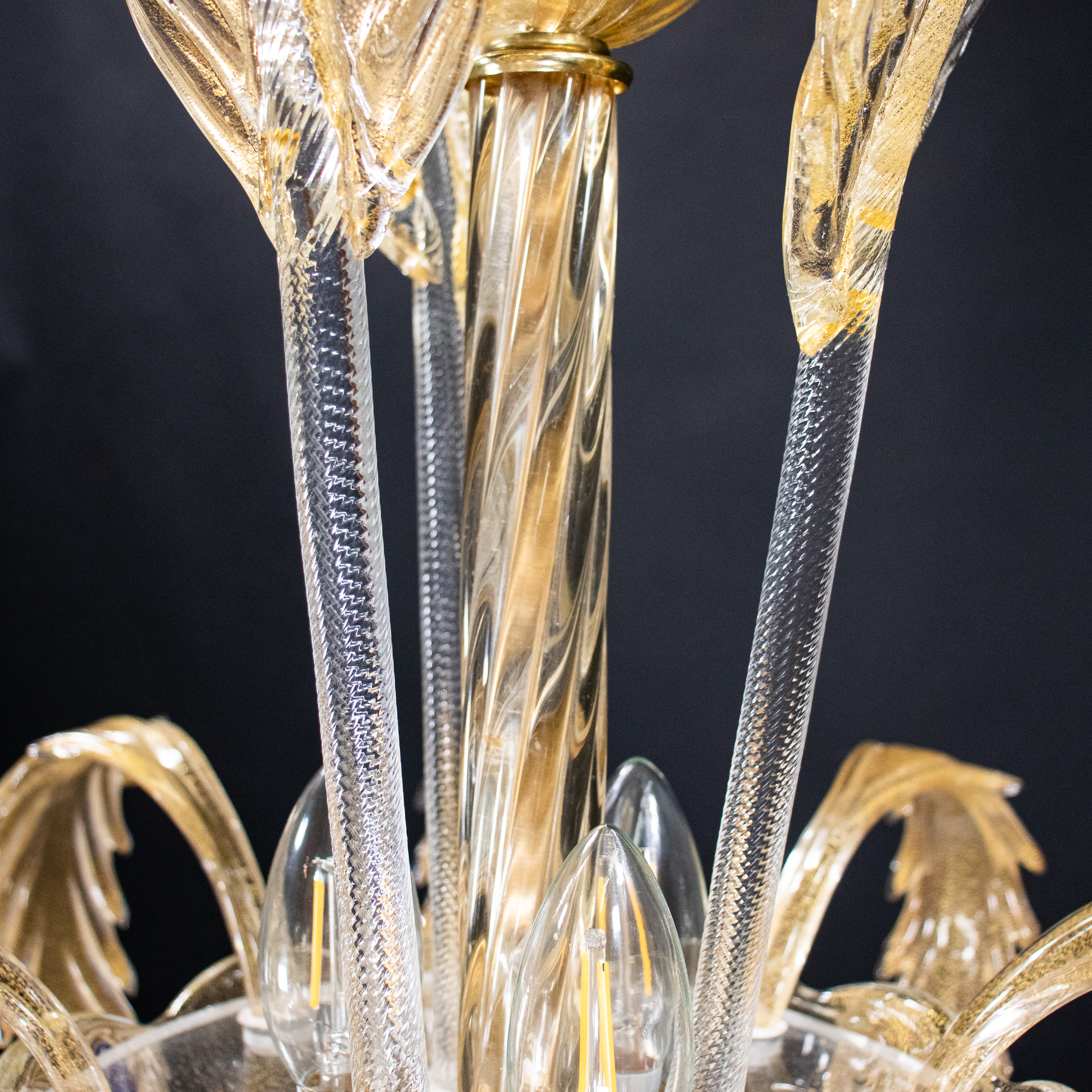
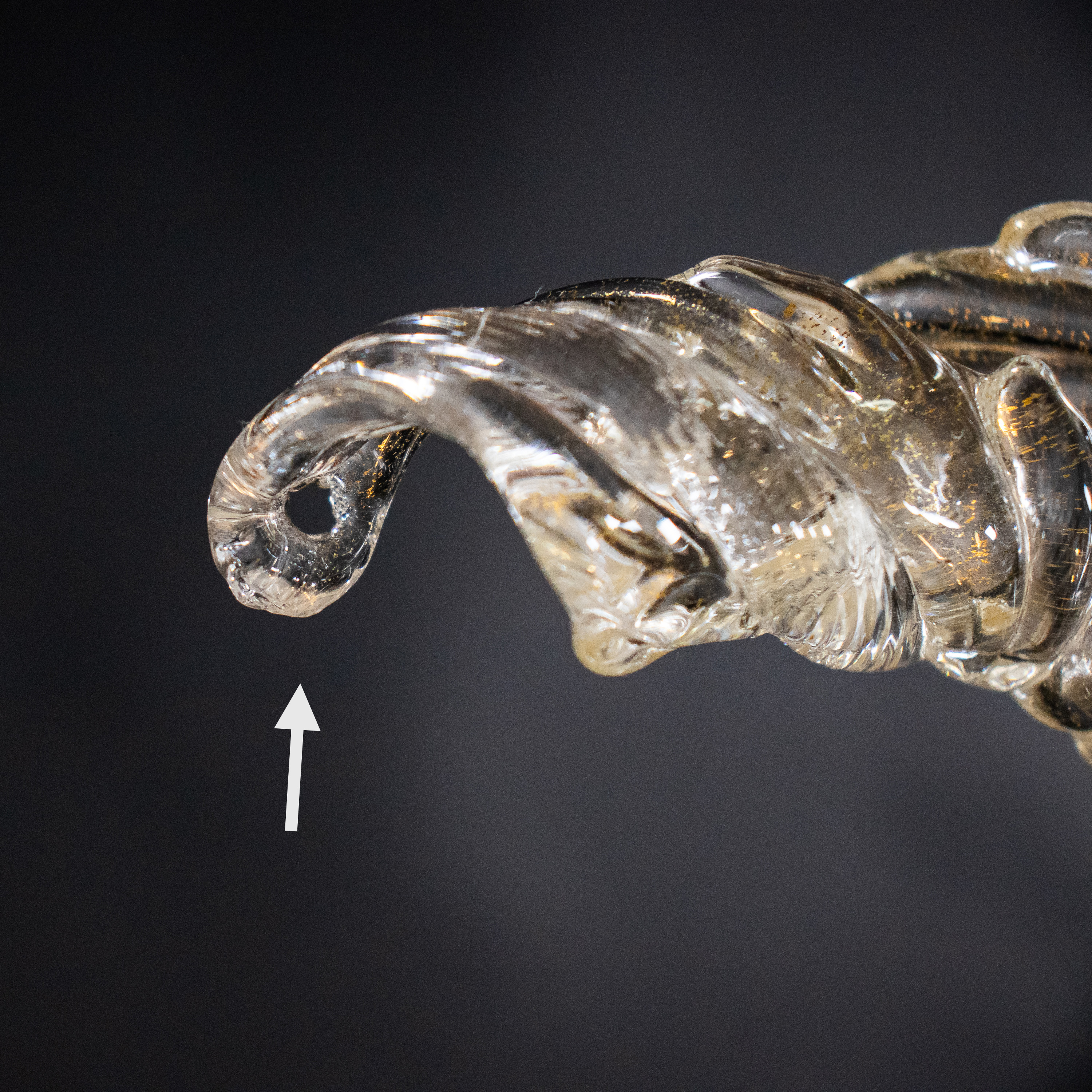
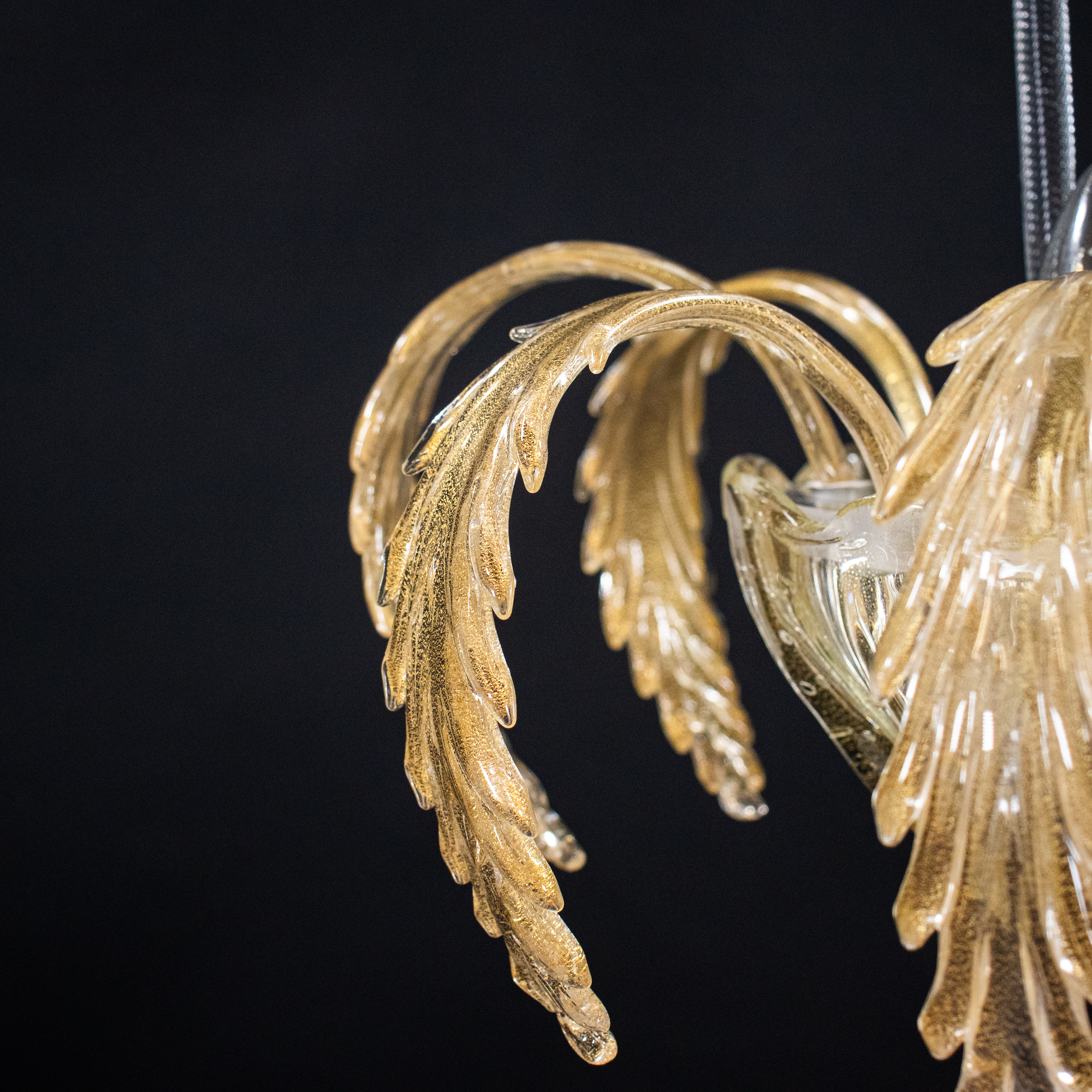
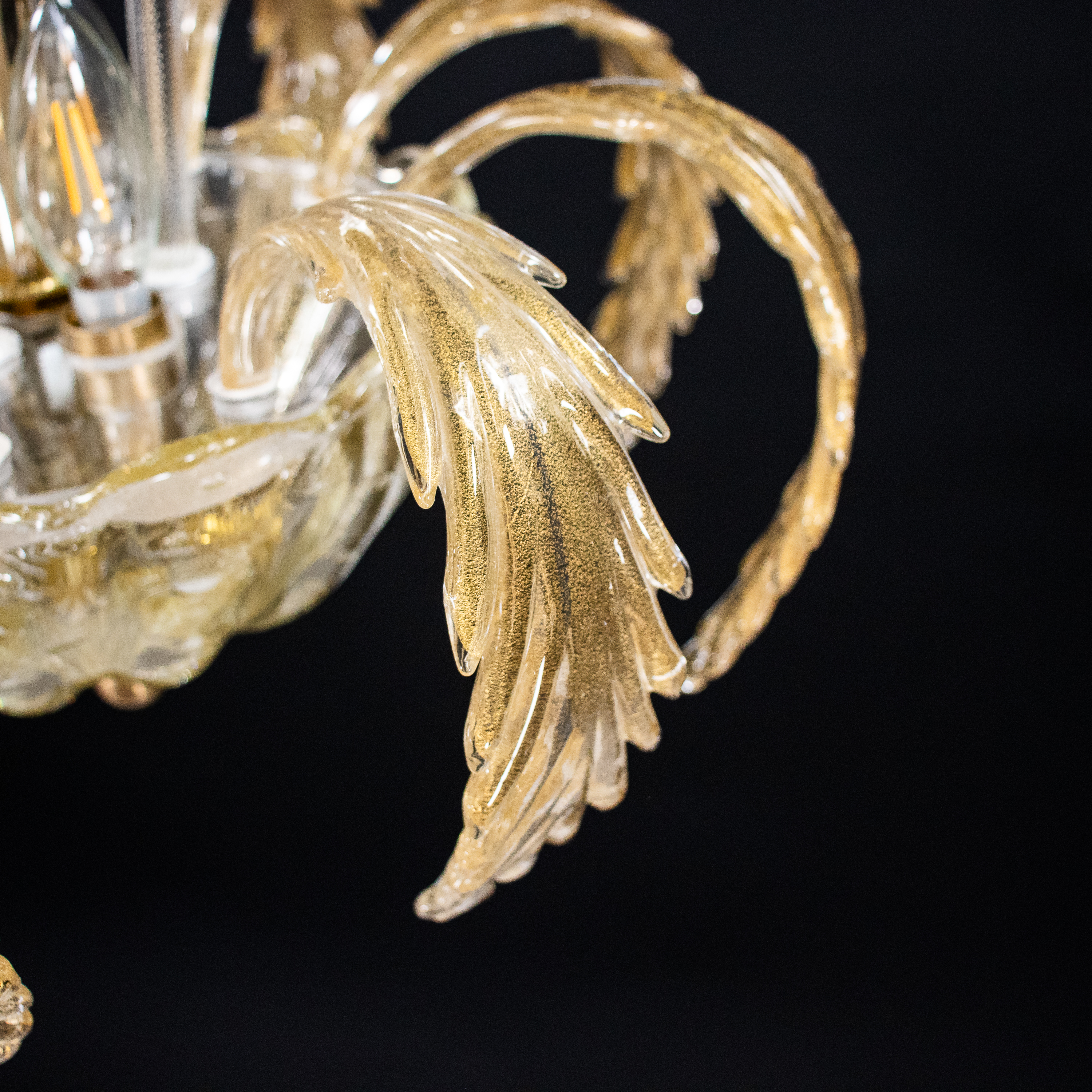
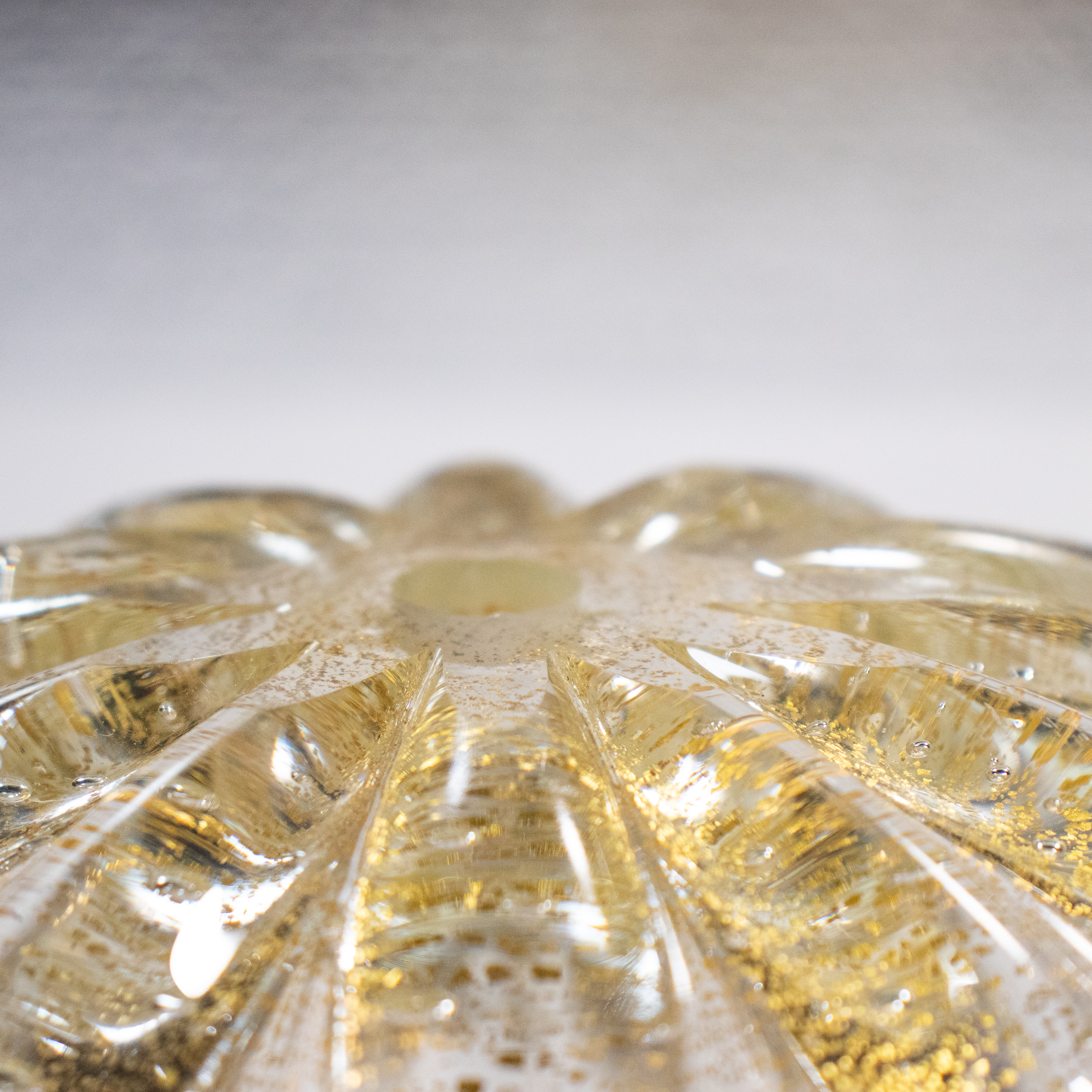
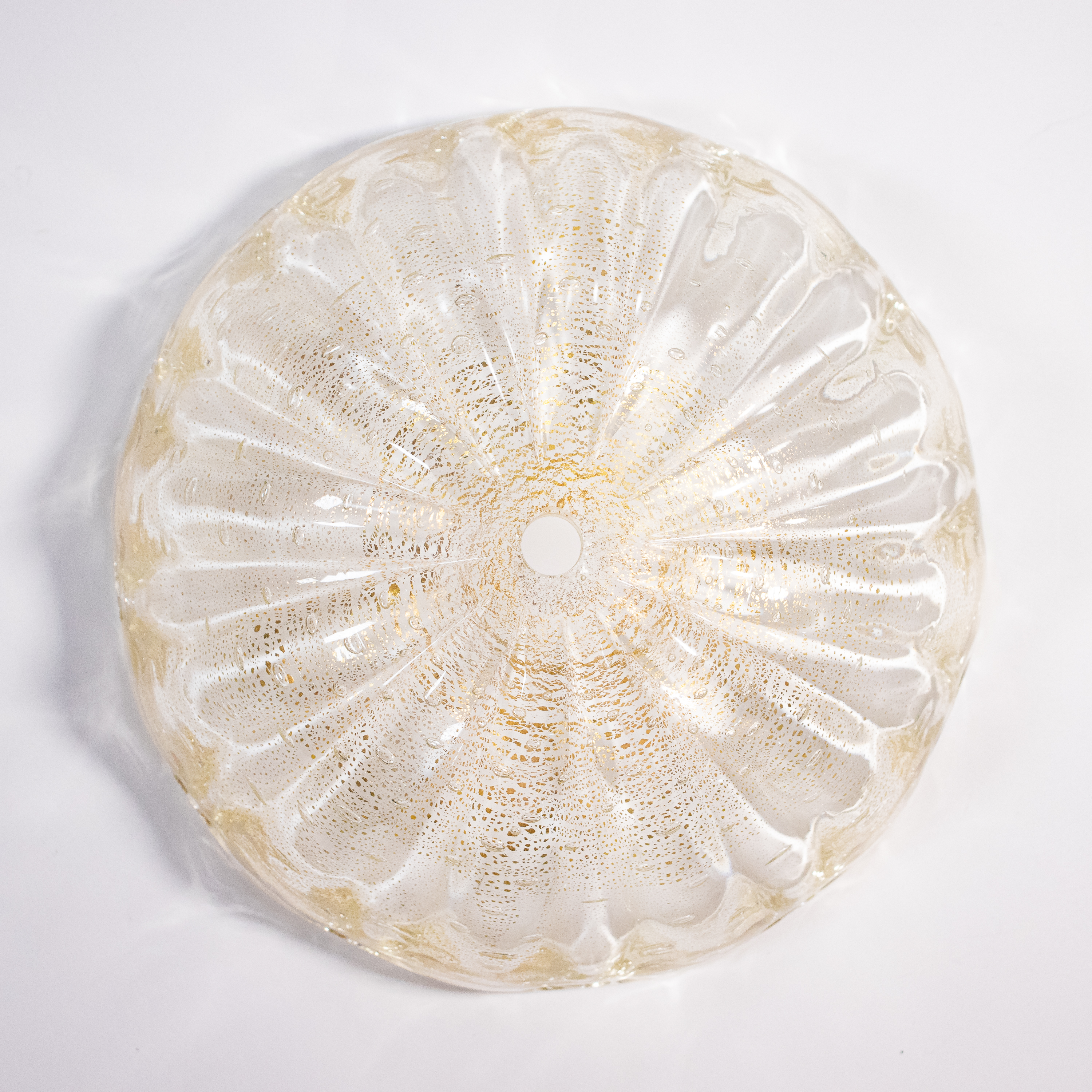
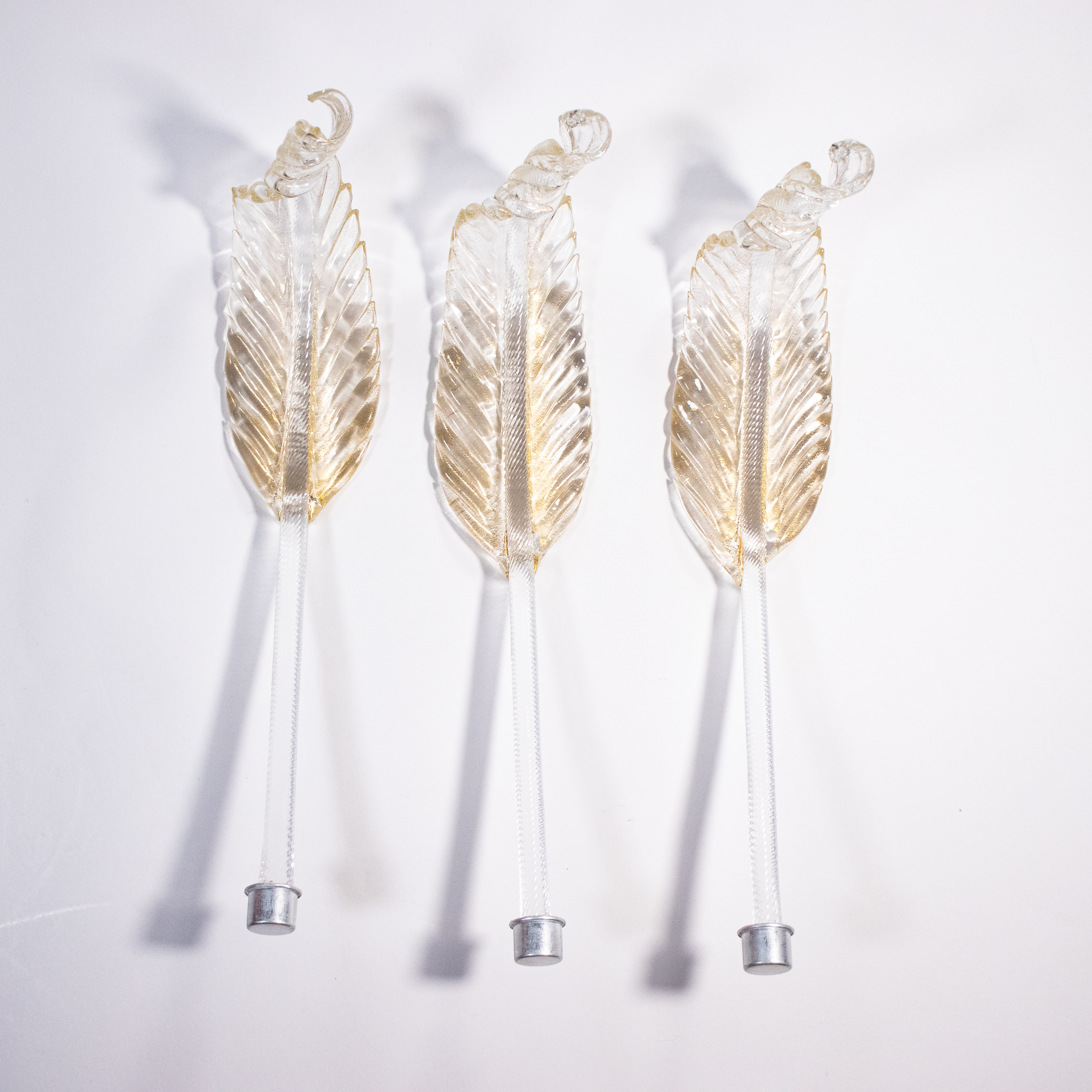
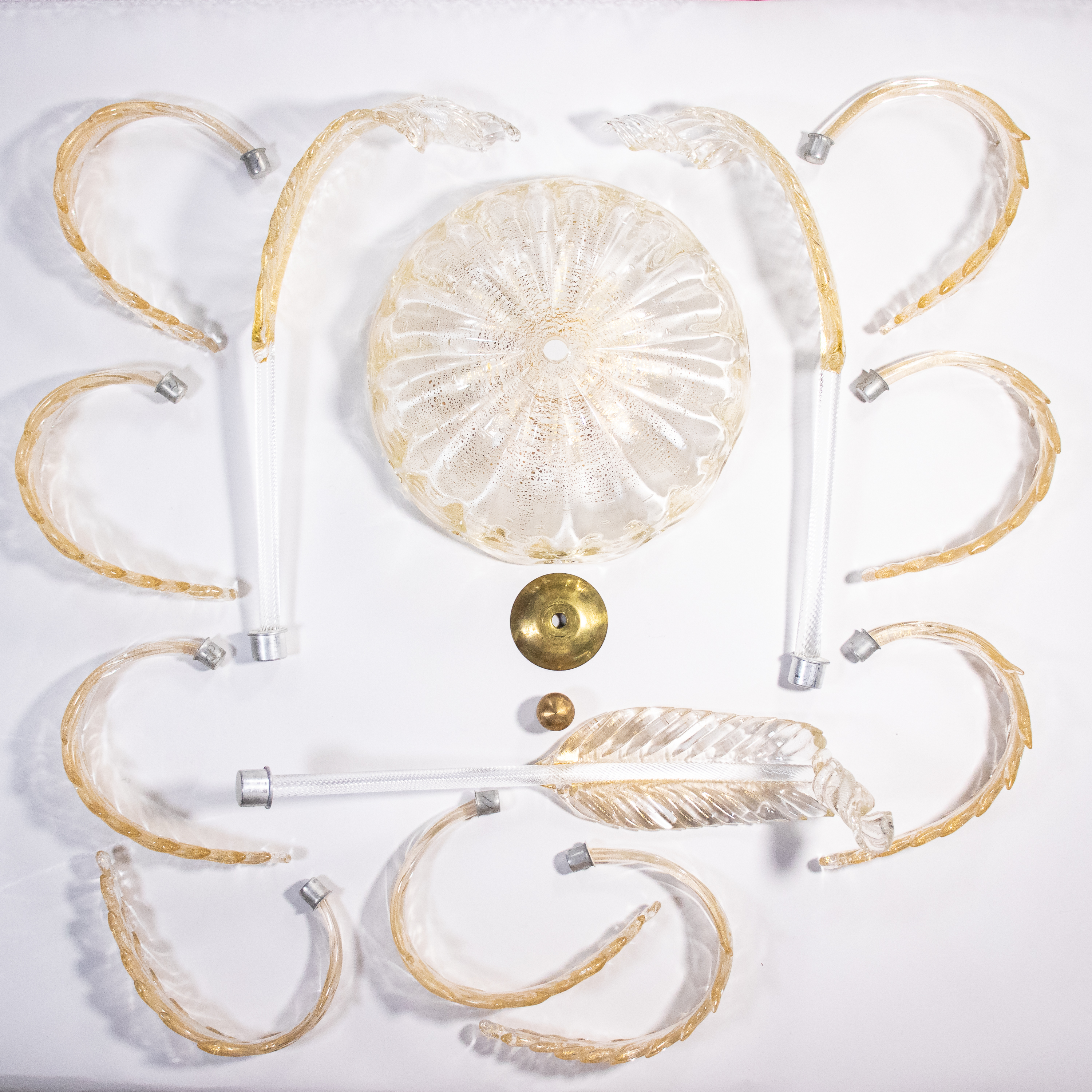
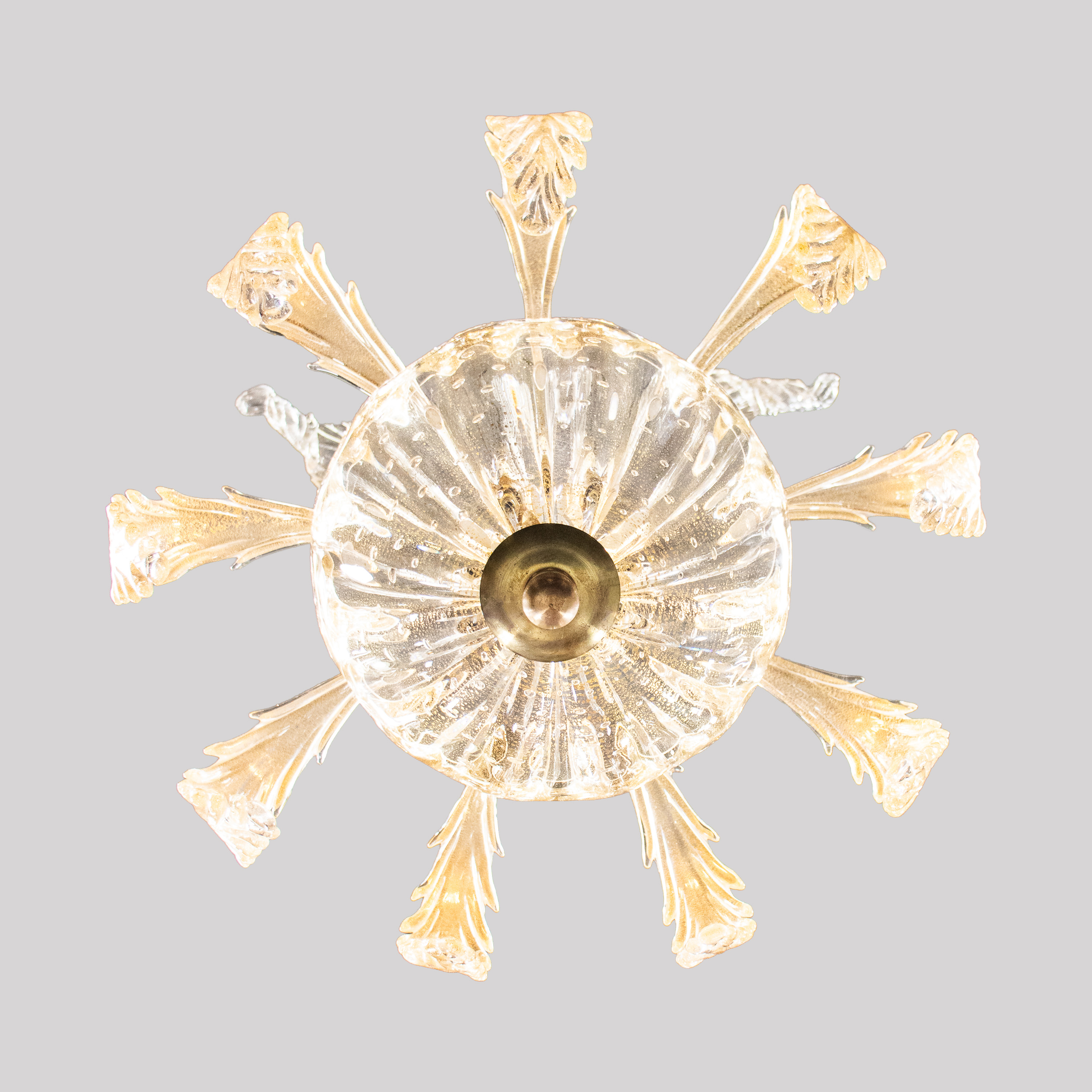
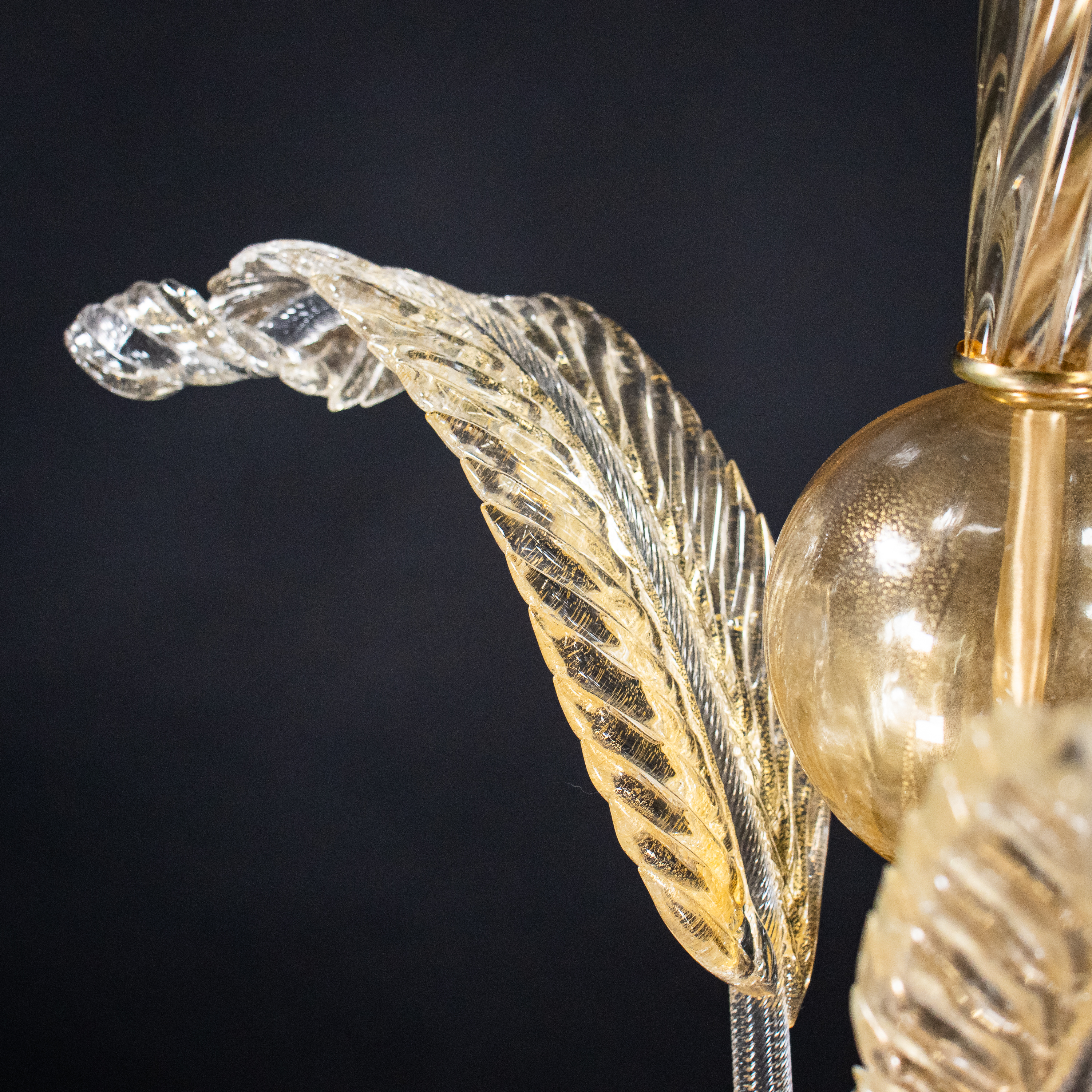
This mid-century fixture showcases a distinctive Medusa silhouette executed in the definitive manner of Ercole Barovier. Innovated by Barovier in 1938 and popularized as a pinnacle of Italian post-war modernism throughout the 1940s and 1950s, the design replicates the organic, fluid symmetry of marine life. “Medusa” refers directly to the jellyfish; viewed from beneath, the dramatic, downward-arching glass leaves step up and down to mimic pulsing tentacles framing a radiant central bell bowl.
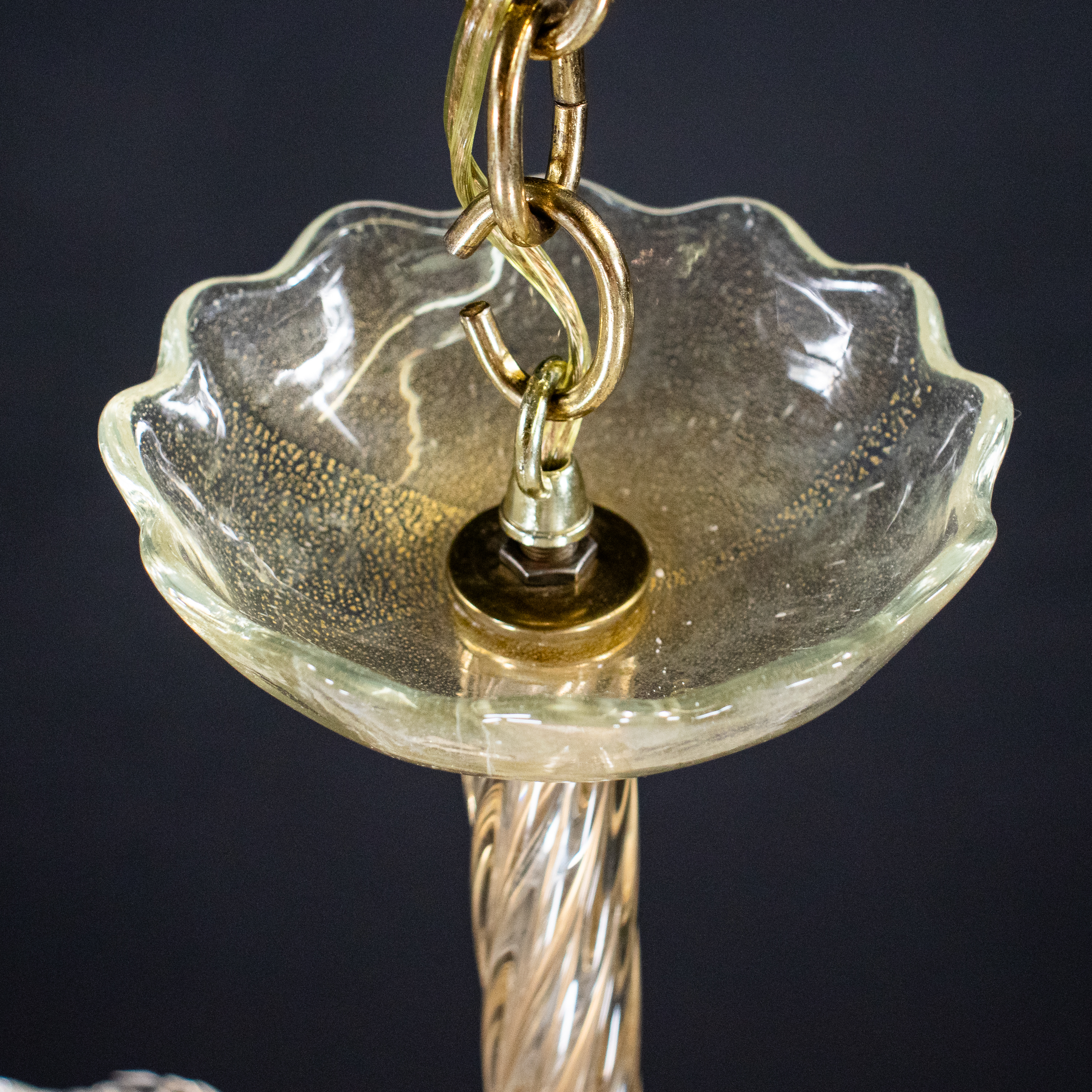
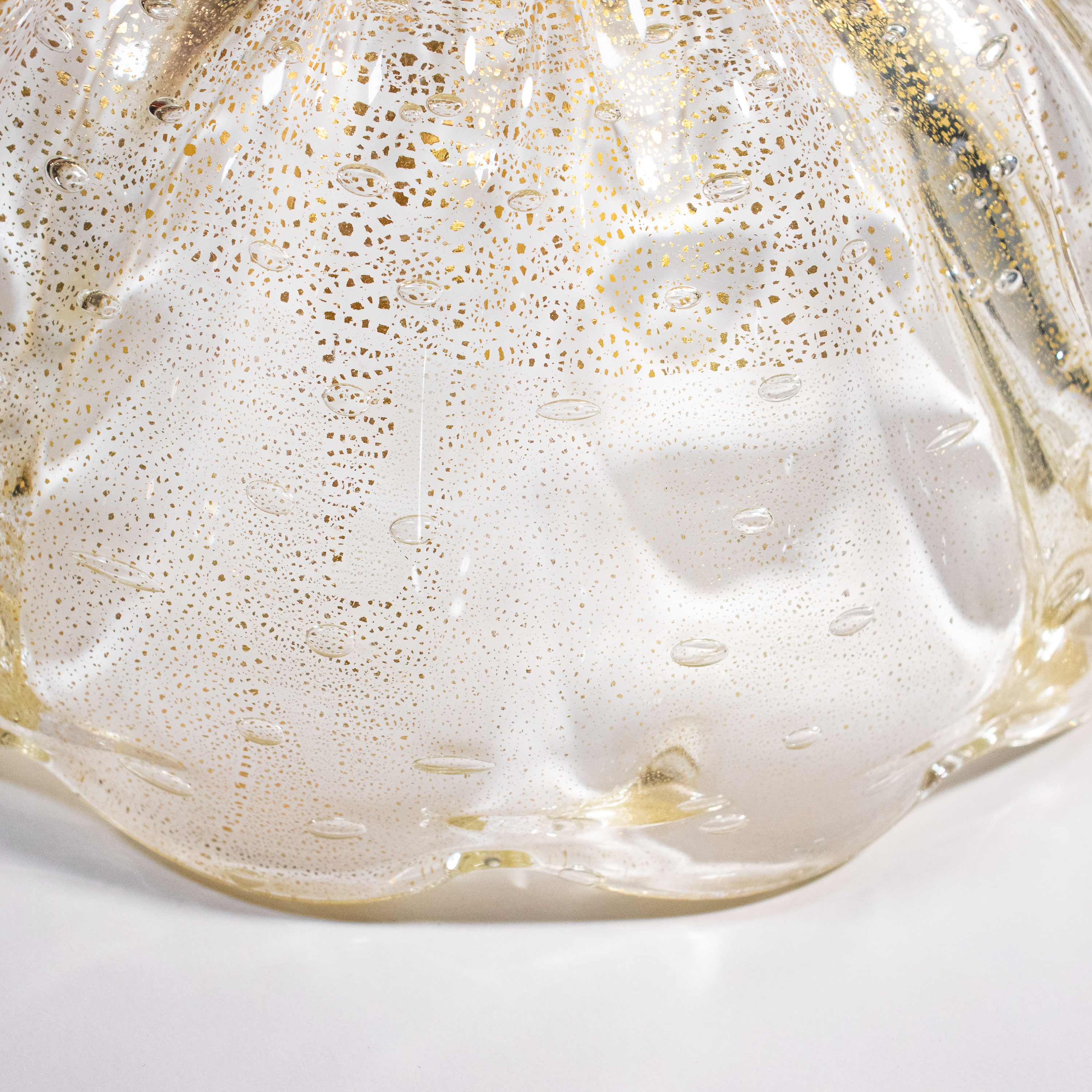
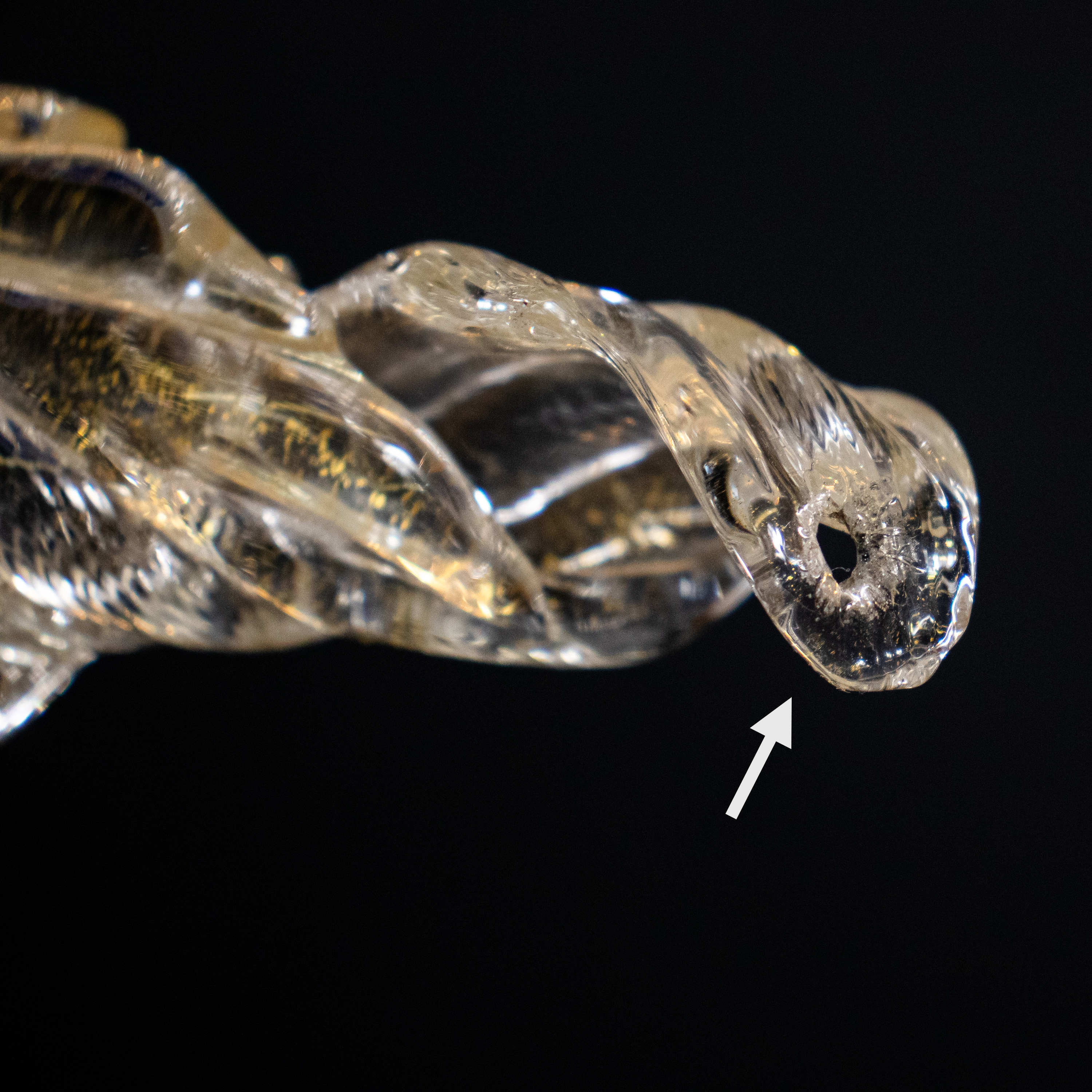
The structural frame, central spiral column, and stylized components are executed in flawless Murano cristallo glass infused with a dense cloud of genuine 24-karat gold leaf inclusions. This legendary formula for ultra-clear glass was invented in Murano around 1450 by Angelo Barovier—Ercole’s direct Renaissance ancestor—who utilized manganese dioxide to neutralize iron impurities.
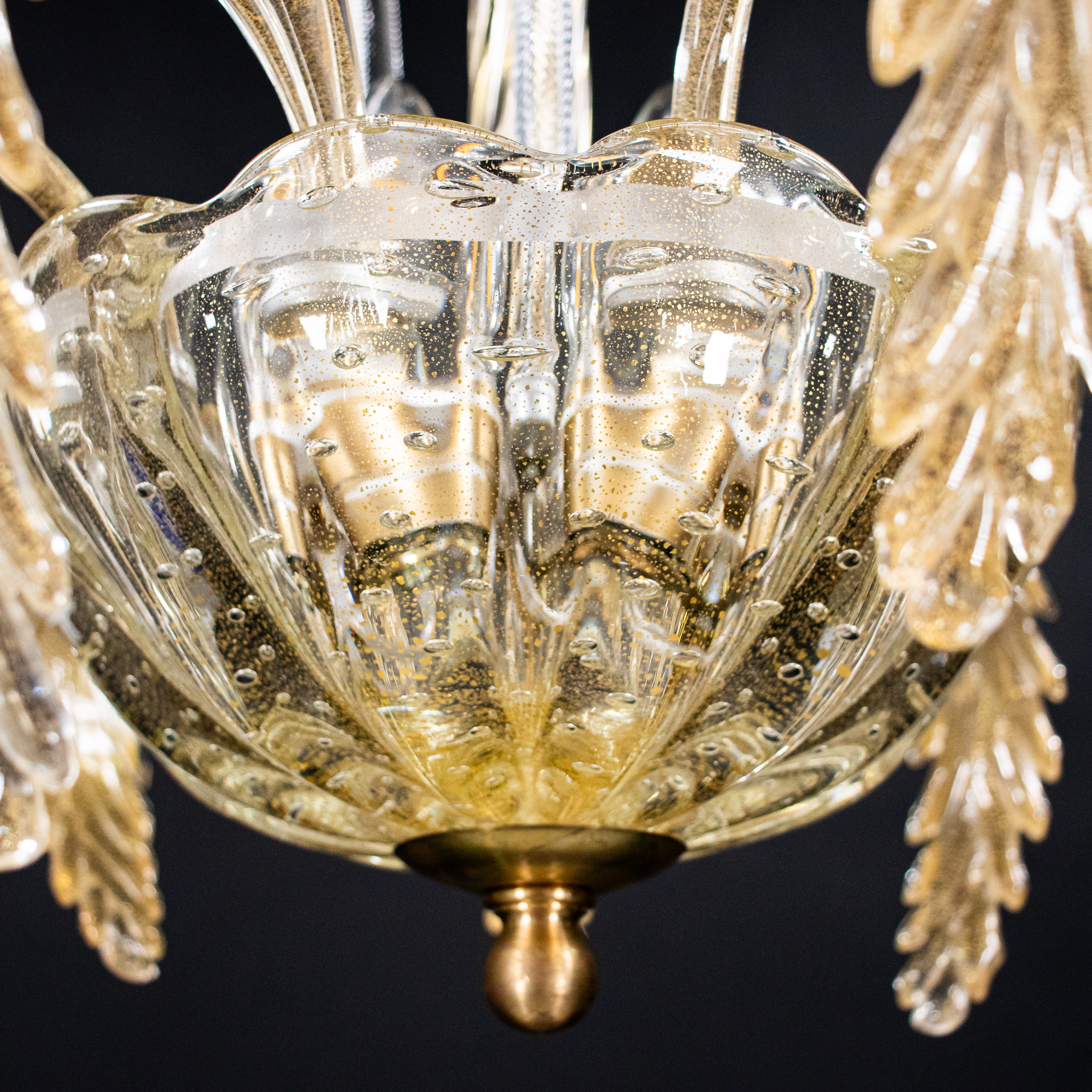
The magnificent central bowl showcases a rare combination of three advanced Venetian glassmaking techniques. It is deeply mold-ribbed to echo the rhythmic lines of the surrounding leaves, densely saturated with gold leaf inclusions, and meticulously executed using the complex bullicante technique. This rigorous, controlled-bubble method traps a flawless, perfectly gridded constellation of small, uniform air pockets deep within the glass walls. This effervescent texture acts as an internal prism, multiplying the illumination from within and casting a warm, shimmering golden glow across the room.
This fixture stands as a pristine, investment-grade example of Italian Post-War lighting design that bringing an undeniable poetic elegance to an entryway, dining salon, or avant-garde living space.
Dimensions without ceiling cover and chain: H=30 in. W=17.5 in. D=17.5 in. 10 lbs.