


Description
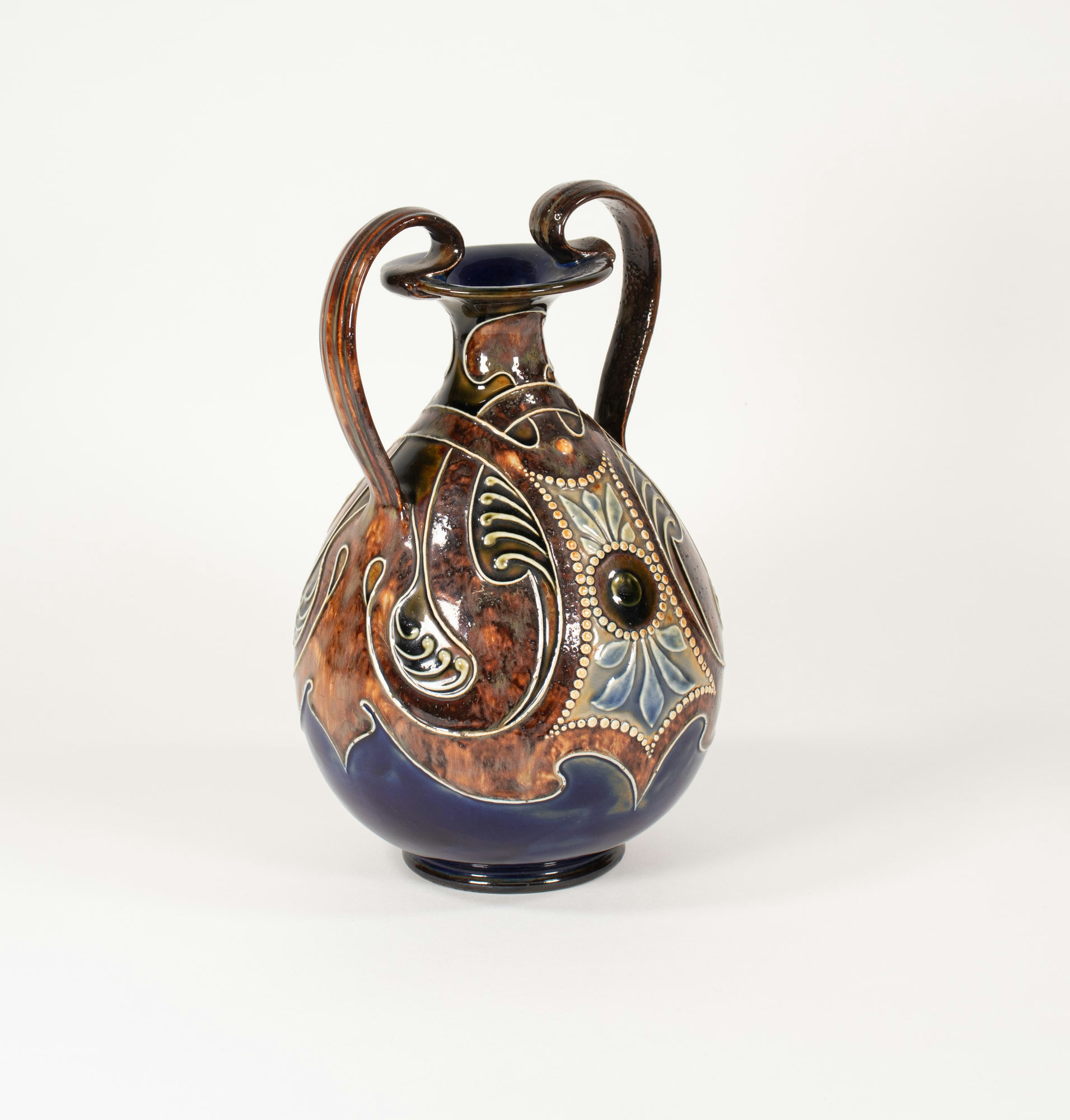
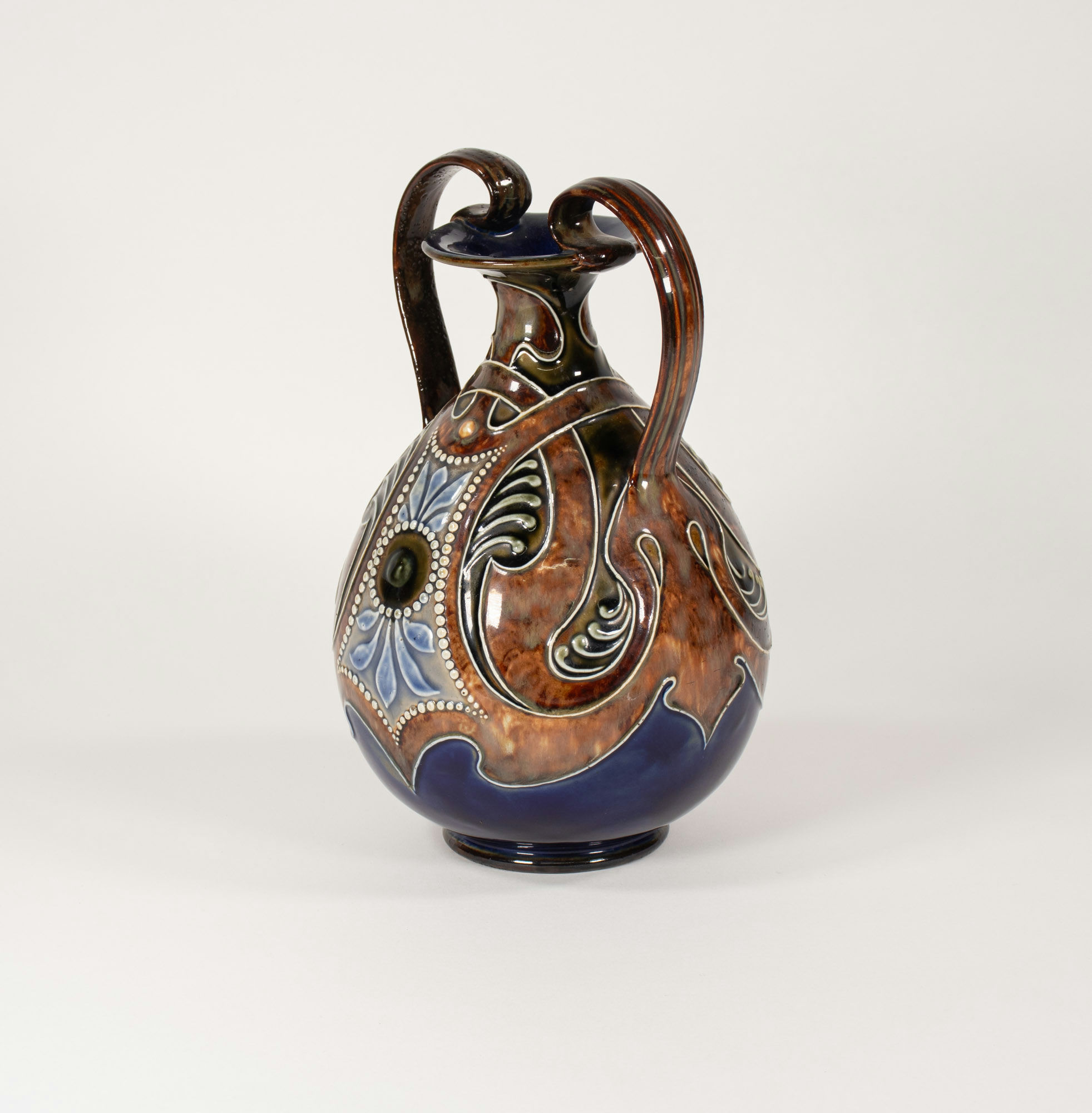
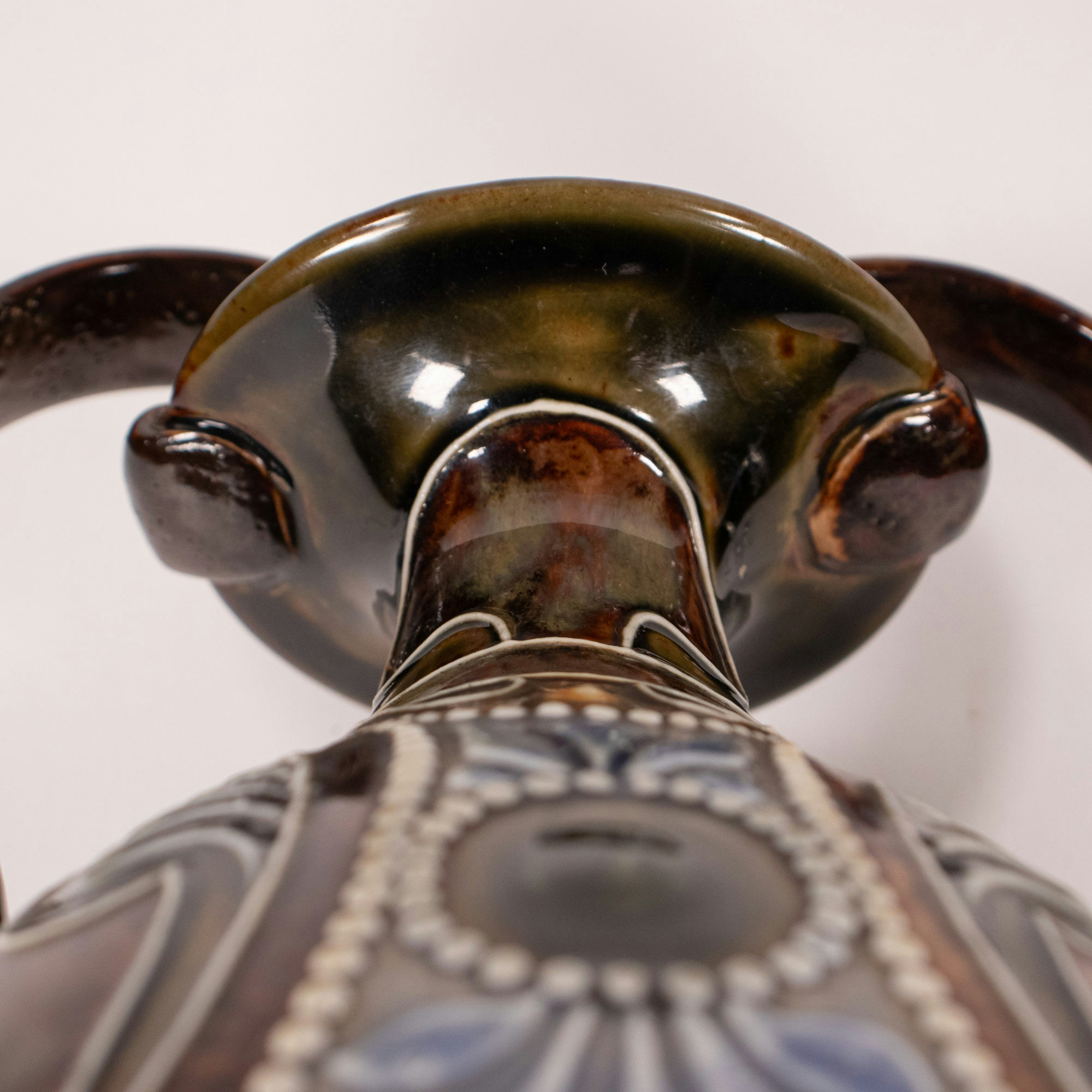
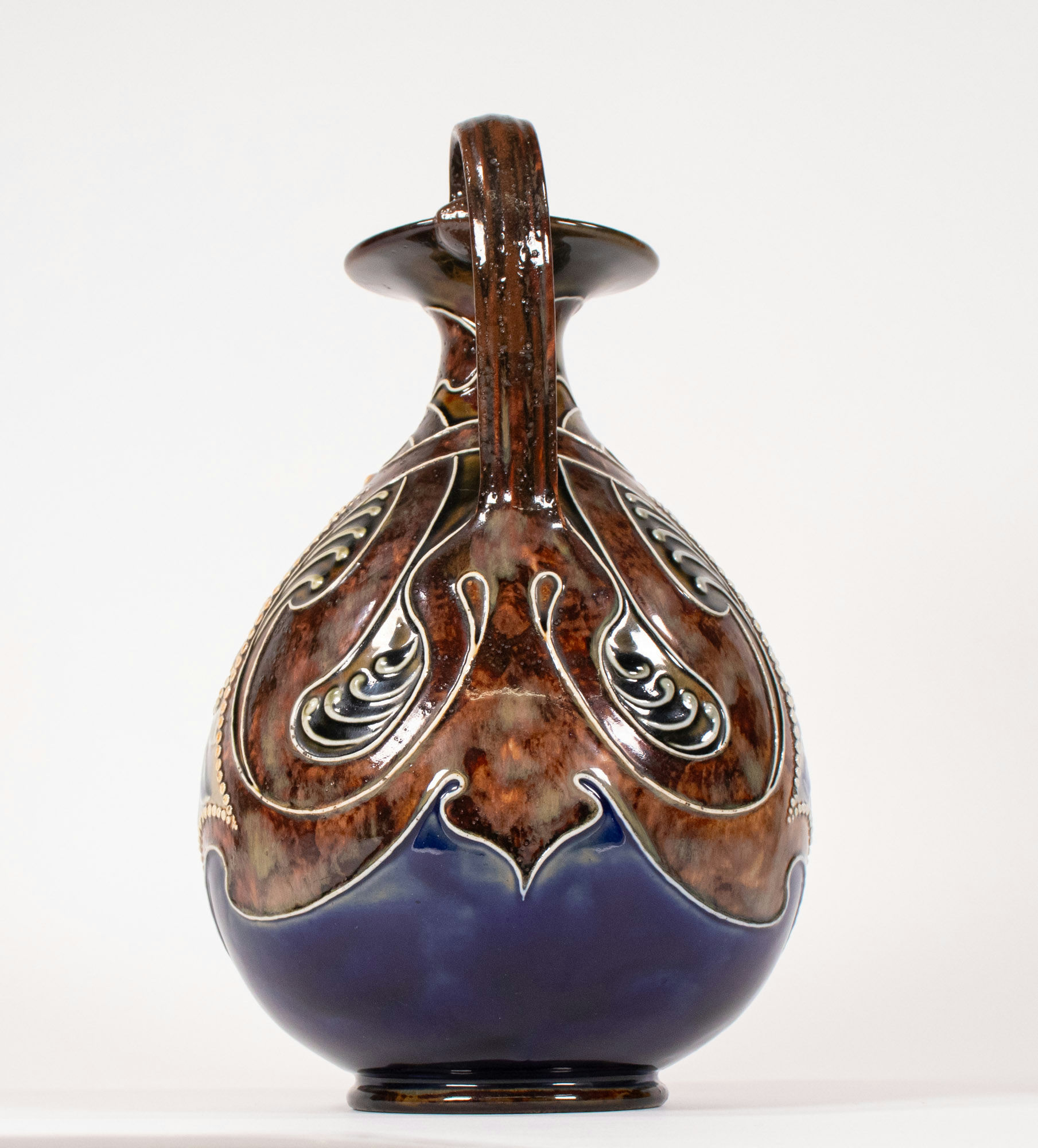
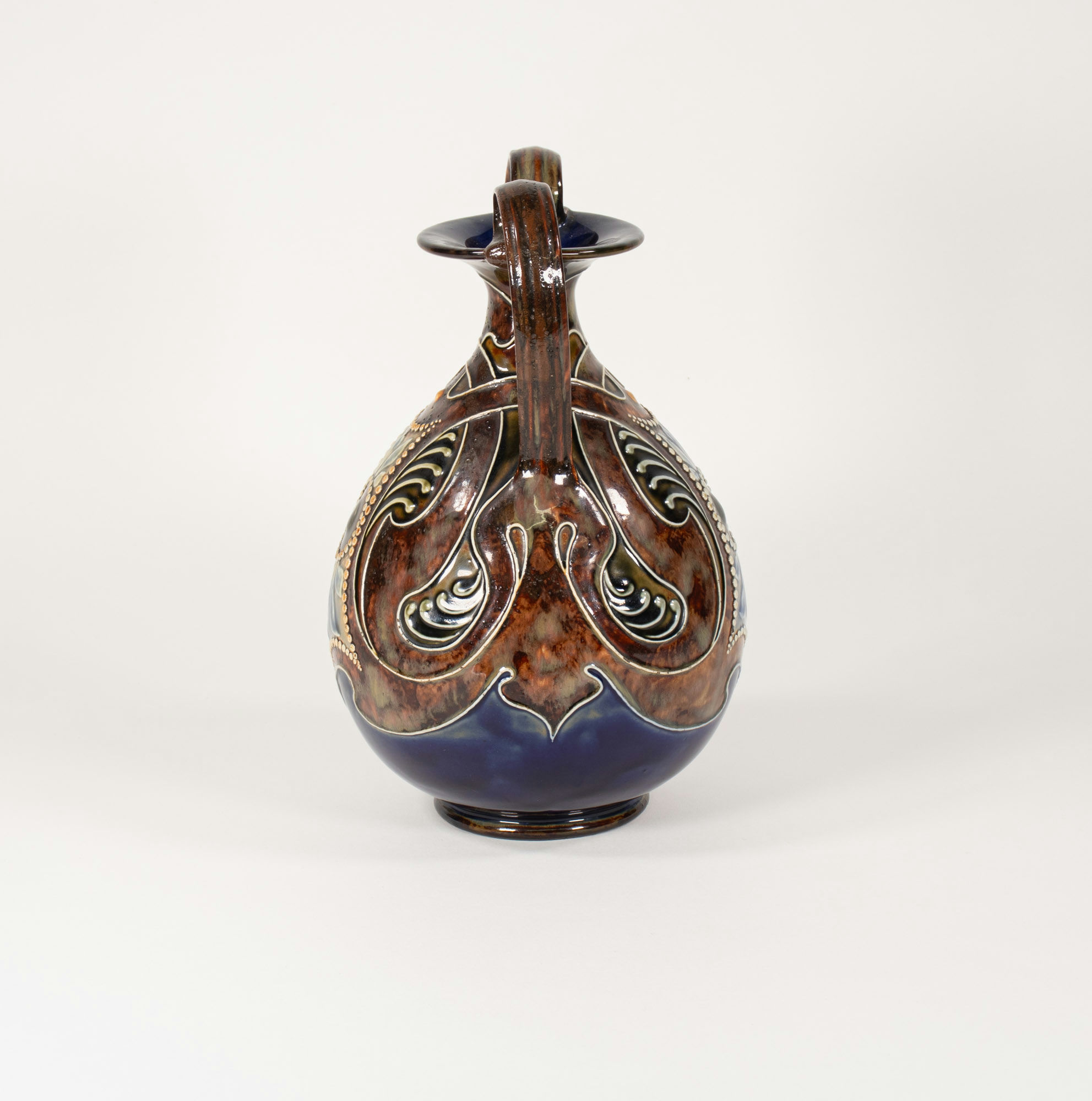
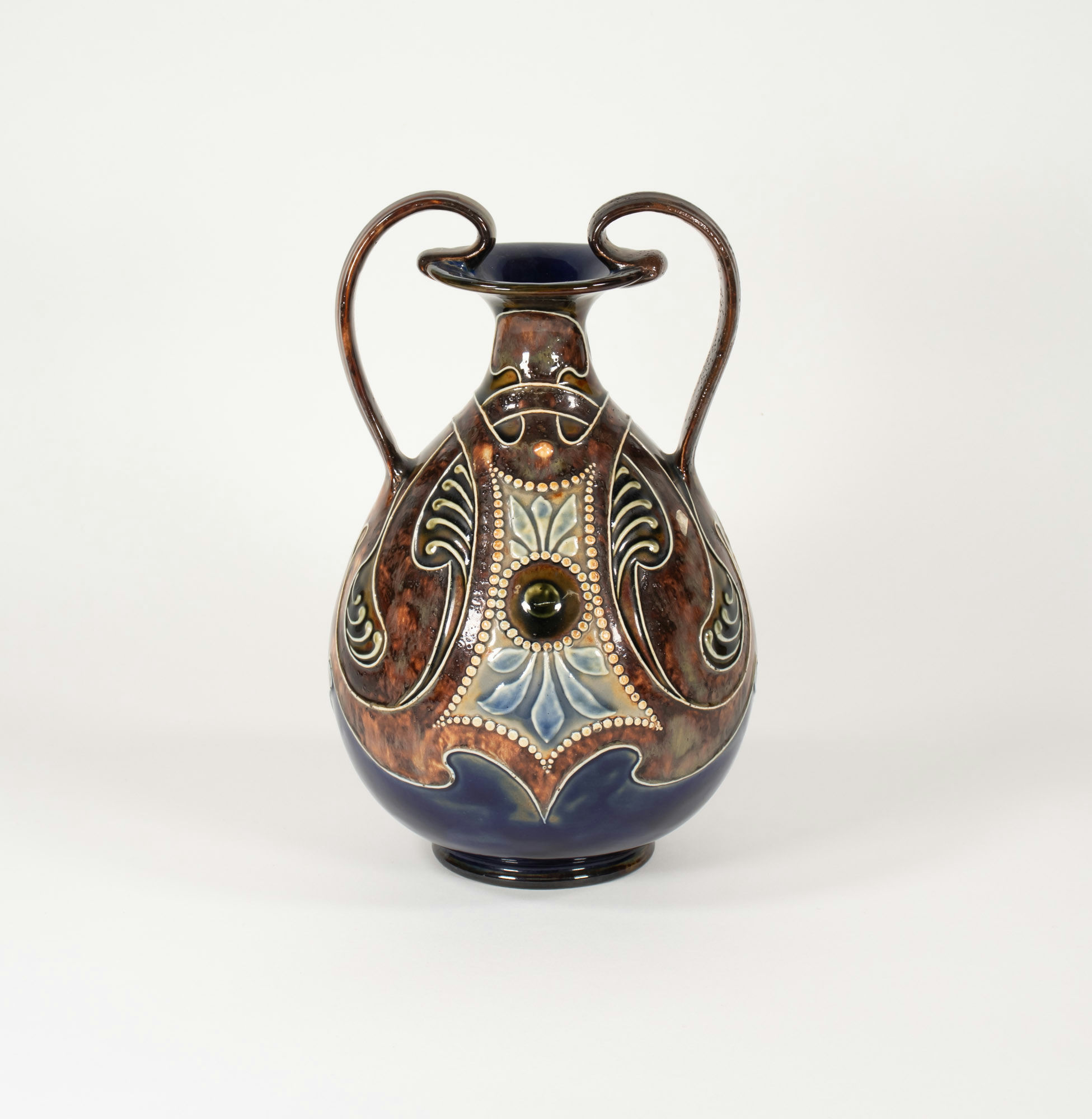
This Late Victorian English Arts & Crafts Royal Doulton Lambeth stoneware amphora by Frank A. Butler was done in Pattern no. 960. This twin-handled vessel is decorated with a mottled burnt umber glaze and other lighter elements. The intricate designs are outlined in relief, displaying the natural color of the pale stoneware. This jug is further decorated with applied beading and botanical motifs. The body of this vase is short and round, similar to the shape of a teardrop, with a slightly elongated neck and wide mouth. The highly arched handles merge with the lip of the mouth, rather than the neck like a traditional amphora-style vase, creating a dynamic shape that mimics the details in the surface design. Every piece of Doulton stoneware was unique, as decorators were given creative freedom, making this piece a one-of-a-kind work of art with impeccable craftsmanship and design.
Frank Butler embarked on his artistic journey at the Lambeth School of Art, initially honing his skills as a stained glass designer. Predecessor, John Sparkes, ushered him into the fold at Doulton, where Butler’s creative prowess truly came to the fore, undeterred by his challenges with deafness and limited speech. Renowned for his innovative designs, Butler’s work mirrored the evolving aesthetics from the Victorian era through the Art Nouveau movement and beyond. The Doulton firm began life making utilitarian stoneware products, such as pipes and water filters, before branching out into more decorative pieces to cater to the growing demand for stoneware inspired by past styles. His tenure at Doulton spanned nearly four decades, from 1872 until 1911, marking a period of prolific output and enduring legacy. His works are housed in museums such as the MET in New York. The clear, relatively simple shapes employed in this patterned vessel may reflect Butler’s early work as a designer of stained glass.
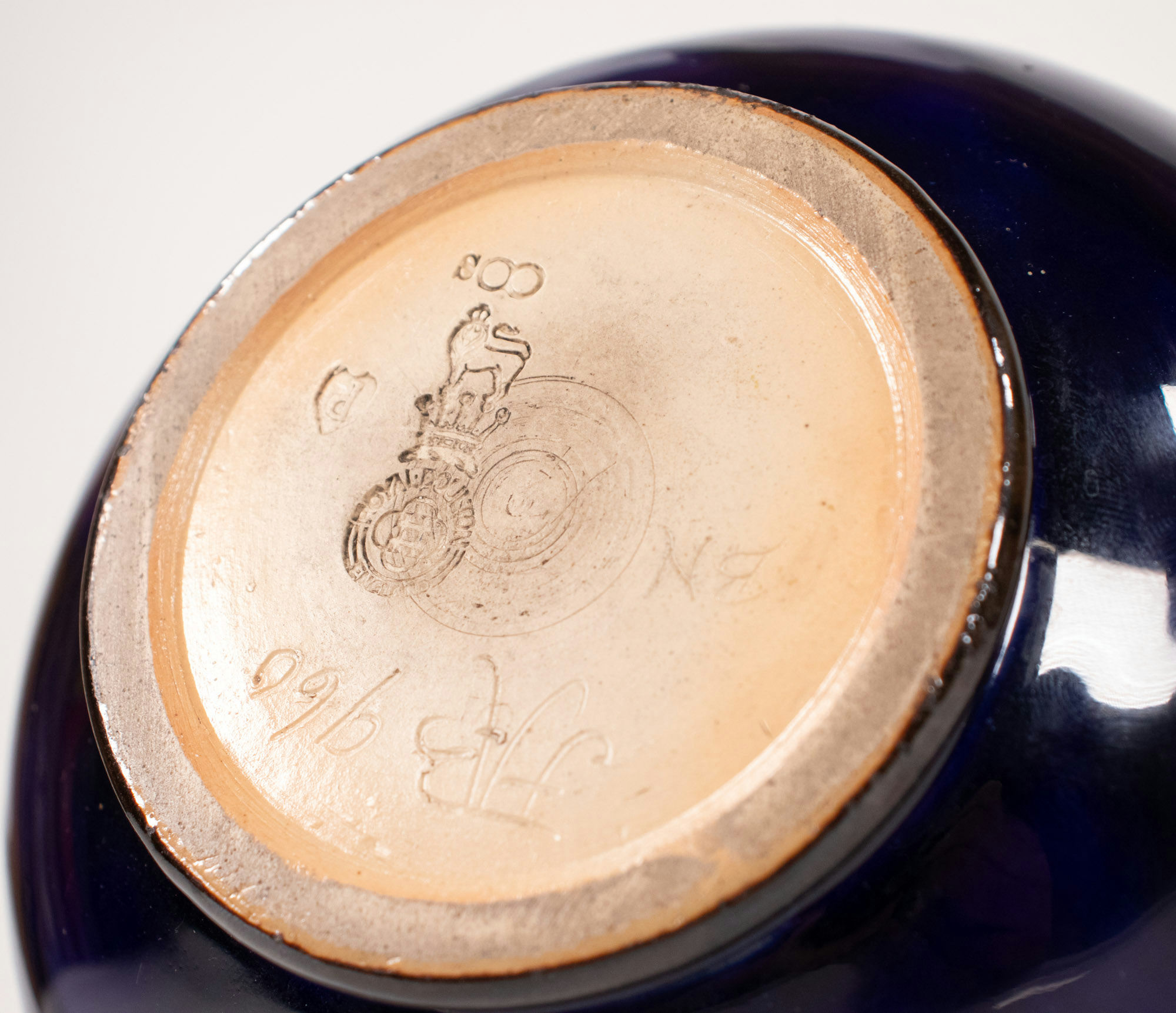
Marks on the base: the Royal Doulton Hallmarks, Pattern No. 960, and artist cipher, Frank A Butler, and impressed shield with lowercase “d” indicating it is from 1903.
H=10.75 in. W=6 in. D=6 in. 5 lbs.